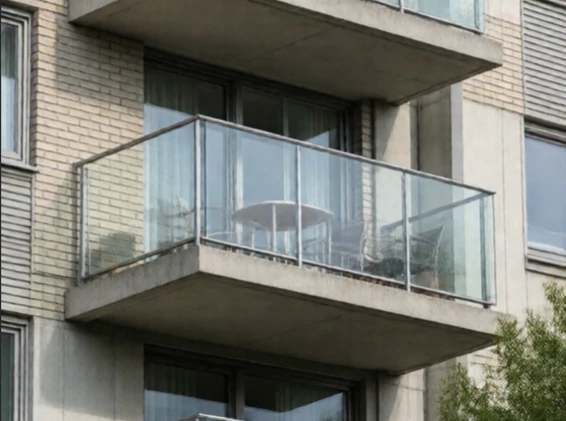
A balcony is a small piece of outdoors attached to a building. It projects from the wall, usually with a railing, and gives occupants a place to stand, sit, or grow a few potted plants. In dense cities, it may be the only private outdoor space a resident has.
Structurally, balconies come in two main types. A cantilevered balcony is built into the floor structure and extends outward without external support. A supported balcony rests on columns, brackets, or a projecting beam. The choice affects both cost and appearance.
Building codes regulate balconies closely. Railings must meet minimum height and strength requirements. Guards must prevent falls, especially for children. In some jurisdictions, balconies above a certain height must be sprinklered or built with noncombustible materials.
Balconies also have a social dimension. In warm climates, they function as outdoor rooms. In cold ones, they may sit unused for months. Their design — depth, privacy, view — determines whether they become a valued amenity or dead space.
Comments
No comments yet. Be the first to share a thought.
Leave a comment