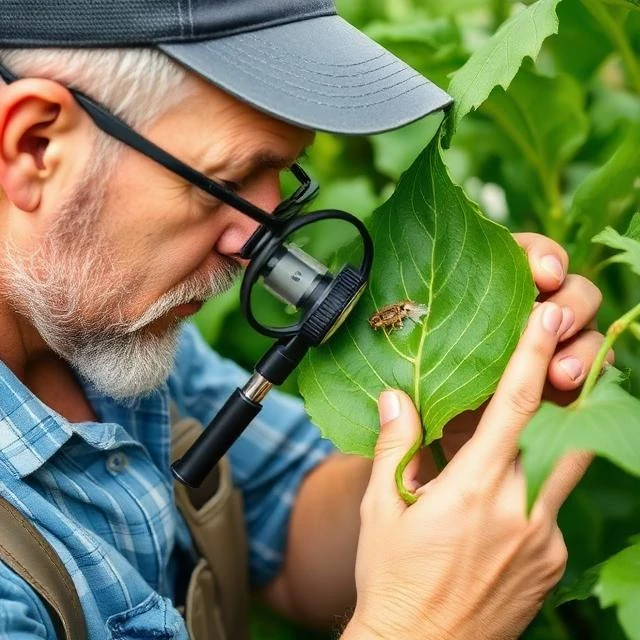
Pest control is the practice of keeping harmful organisms below the level where they cause economic damage. It is not the same as eradication. In most farming systems, the goal is management, not elimination.
Methods fall into four broad categories. Cultural controls change the environment: crop rotation, sanitation, resistant varieties, planting dates. Mechanical controls use physical force: tillage, mowing, traps, hand-picking, and barriers. Biological controls use living organisms: predators, parasitoids, and pathogens. Chemical controls use pesticides, ideally as a last resort and chosen to minimise harm to beneficial species. Integrated pest management combines all four, guided by monitoring.
What effective control looks like
- Scouting fields regularly and recording what you find
- Knowing the economic threshold for each pest
- Acting early, before populations explode
- Rotating methods so pests do not adapt
Pest control is a moving target. Insects develop resistance, new species arrive, and regulations change. The farms that stay ahead are the ones that watch closely and vary their approach.
Comments
No comments yet. Be the first to share a thought.
Leave a comment