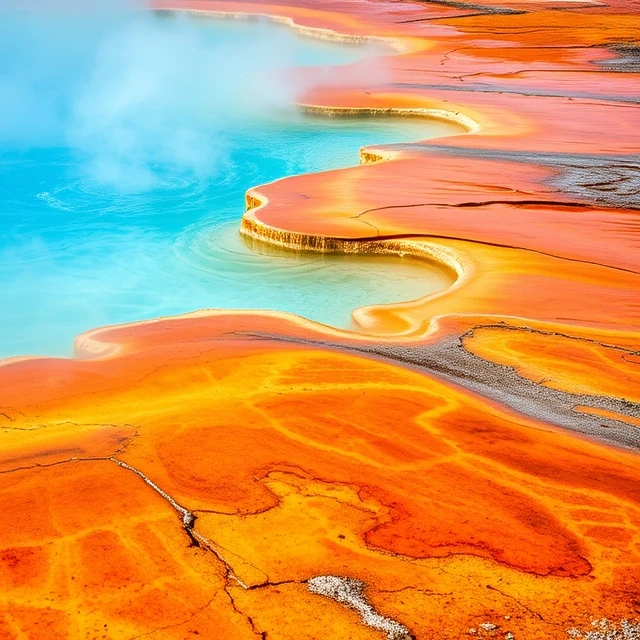
Water heated deep underground can return to the surface still warm or hot. A hot spring is a natural discharge of geothermally heated groundwater. Temperatures range from just above ambient to boiling.
Most hot springs occur in volcanic or tectonically active regions where magma or deep circulation along faults supplies heat. Dissolved minerals often precipitate around the vent, building colorful terraces of sinter or travertine. Microbial mats adapted to high temperatures create additional hues.
People have used hot springs for bathing and therapy for millennia. Some springs feed geysers; others simply flow steadily. Changes in temperature or flow can signal subsurface magmatic or tectonic activity. The combination of heat, water, and minerals creates environments found nowhere else on the surface.
- Natural spring of geothermally heated water
- Common in volcanic and tectonic areas
- Often deposits mineral terraces
- Supports specialized heat-tolerant microbes
Comments (2)
Leave a comment