A channel or pipe built to carry water over long distances.
🌉
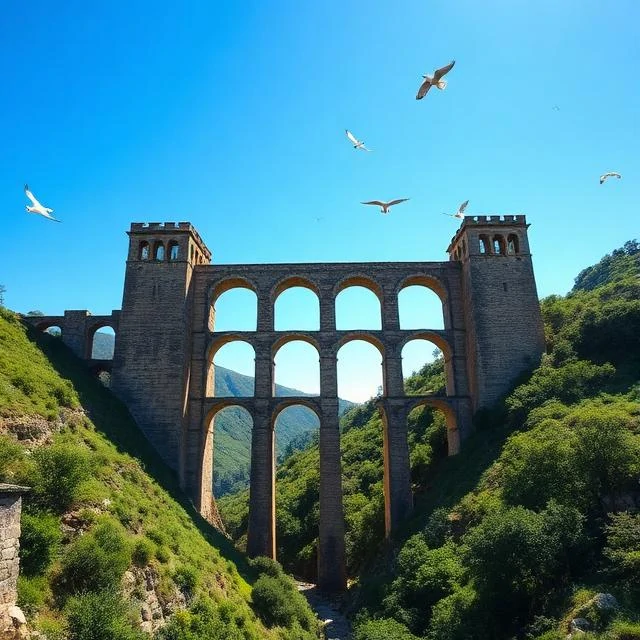
An aqueduct is a channel, pipe, or bridge-like structure built to convey water over long distances, typically from a source to a settlement or agricultural area. The word derives from the Latin aquaeductus, from aqua ('water') and ducere ('to lead'). Ancient Roman aqueducts, built from the 4th century BCE onward, are the most famous examples; eleven aqueducts supplied Rome at its peak, delivering roughly one million cubic metres per day through gravity-fed channels lined with waterproof cement. Many sections ran underground, while above-ground arcades such as the Pont du Gard in France and the Aqueduct of Segovia in Spain remain iconic. Similar systems existed in ancient Egypt, Assyria, Greece, India, and China. In agriculture, aqueducts historically irrigated fields and supplied livestock; modern equivalents include concrete canals, pipelines, and large-scale water-transfer projects such as California's aqueduct system. Contemporary aqueducts face challenges of leakage, evaporation, and ecological impact on source rivers, prompting innovations like covered canals and drip distribution networks.
Comments
No comments yet. Be the first to share a thought.
Leave a comment