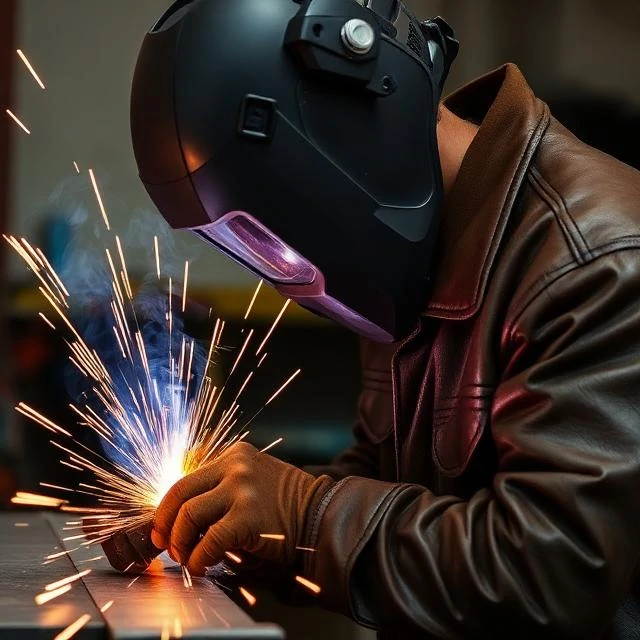
Welding joins metal parts by heating them to melting point. The parts fuse together, often with a filler material. The result is a permanent joint that is as strong as the base metal. Welding is used in steel construction, pipelines, ships, and cars. It is a skilled trade. The welder must understand the metal, the process, and the joint. They must control the heat, the speed, and the angle. A good weld is smooth, strong, and free of defects. A bad weld can fail and kill.
Welding comes in several processes. Stick welding, or shielded metal arc welding, is the oldest and most versatile. MIG welding, or gas metal arc welding, is fast and easy to learn. TIG welding, or gas tungsten arc welding, is precise and clean, used for thin materials and aluminum. Flux-cored welding is used outdoors and on thick materials. Each process has its own equipment, electrodes, and shielding gas. The choice depends on the metal, the position, and the quality required.
Welding is dangerous. The arc produces intense ultraviolet light that can burn the eyes and skin. The welder must wear a helmet with a dark lens, gloves, and a leather jacket. The fumes can be toxic. The work must be ventilated. The sparks can start a fire. The area must be cleared. The welder must be certified for structural work. The weld must be inspected with visual, ultrasonic, or X-ray methods. A weld is a connection. It is also a responsibility. The welder signs their work with the weld. It must hold.
Comments (2)
Leave a comment