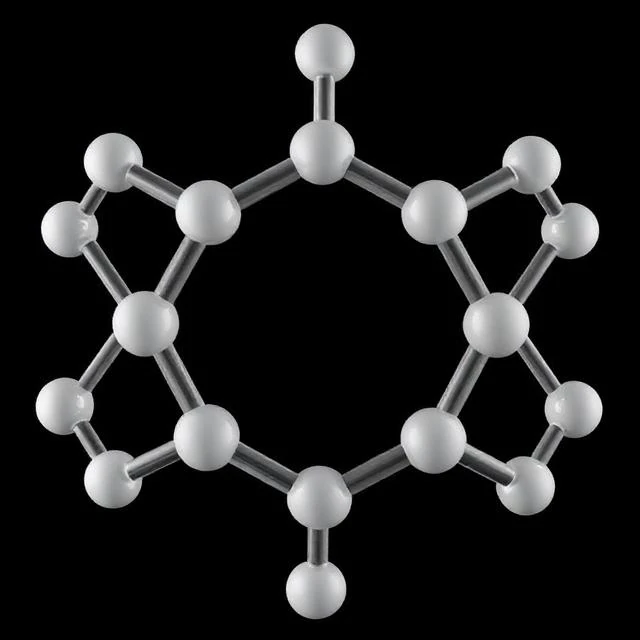
Ethyne, commonly called acetylene, burns with a bright white flame. Welding torches use it to cut through steel. It is the simplest alkyne, a hydrocarbon with a carbon-carbon triple bond. The triple bond is the defining feature. It is shorter and stronger than a double bond, and it makes the molecule linear at the carbons involved. The general formula is CnH2n-2. Ethyne is C2H2, propyne is C3H4, butyne is C4H6.
The triple bond consists of one sigma bond and two pi bonds. The high electron density around the triple bond makes alkynes more acidic than alkenes or alkanes. The terminal hydrogen on an alkyne can be removed by a strong base, forming an acetylide ion. That ion is a useful nucleophile in organic synthesis, used to build larger molecules. The alkyne can also undergo addition reactions, adding two equivalents of a reagent across the triple bond.
Alkynes are used in welding, as fuel, and as building blocks for organic synthesis. They are also found in some natural products. The compound ethynylestradiol, a synthetic estrogen used in birth control pills, contains an alkyne group. The triple bond is not just a structural curiosity. It is a versatile chemical handle.
Comments
No comments yet. Be the first to share a thought.
Leave a comment