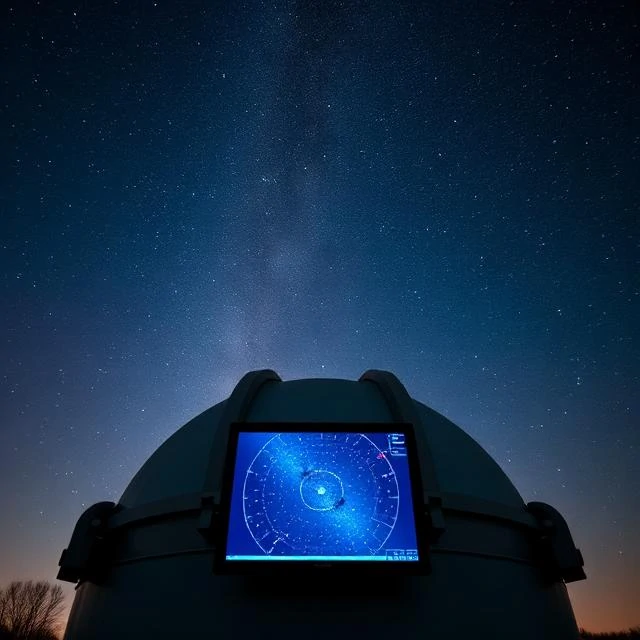
Astrometry is the oldest branch of astronomy. It measures the positions and motions of celestial objects with extraordinary precision. Before telescopes, astronomers tracked the planets by eye and recorded their positions against the stars. That work revealed that planets orbit the Sun, not the Earth.
Modern astrometry uses telescopes, cameras, and computers to measure positions to milliarcsecond accuracy. The European Space Agency's Gaia mission has cataloged the positions, distances, and motions of nearly two billion stars. Its data have transformed our understanding of the Milky Way's structure and history.
Astrometry finds planets too. A star with an orbiting planet wobbles slightly as the planet pulls on it. That wobble shows up as a periodic shift in the star's position on the sky. This method, called astrometric detection, complements the transit and radial velocity techniques. It works best for massive planets in wide orbits.
The field also tracks asteroids, comets, and spacecraft. Precise positions keep us from losing track of objects and help predict close approaches. Without astrometry, we would be navigating the solar system blind.
Comments
No comments yet. Be the first to share a thought.
Leave a comment