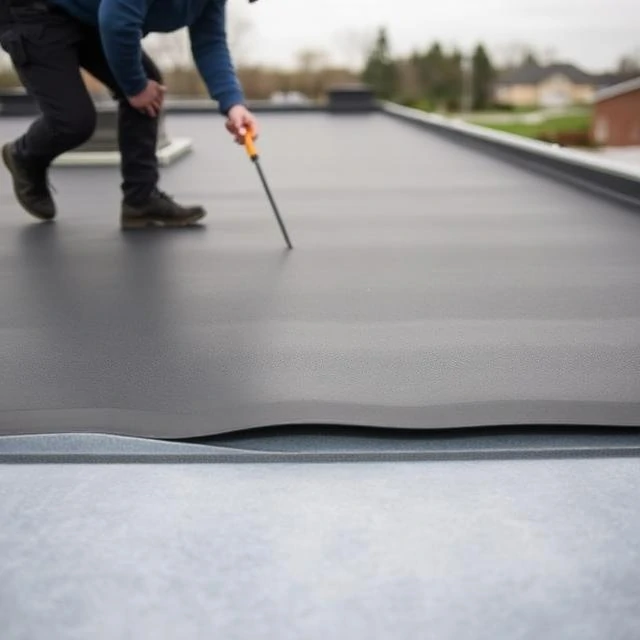
Water destroys buildings. It rots wood, corrodes steel, erodes mortar, and grows mold. Waterproofing is the process of making a building surface resistant to water penetration. It is not glamorous work, but it is some of the most important work on any project.
Waterproofing happens at every scale. Below grade, foundation walls are coated with membranes or bentonite clay to keep groundwater out. Roofs use membranes, flashing, and sealants to shed rain. Bathrooms use tile and waterproof backer board. Windows and doors rely on careful flashing and seals. Even the smallest gap can let water in.
There are two main approaches. Positive-side waterproofing is applied to the side of the surface that faces the water. Negative-side waterproofing is applied to the inside face. Positive-side is generally preferred because it stops water before it reaches the structure. Negative-side is used when the positive side is inaccessible.
Waterproofing failures are expensive. Fixing a leaking foundation may require excavation. Fixing a leaking roof may require removing the roof covering. Getting it right the first time is always cheaper.
Comments
No comments yet. Be the first to share a thought.
Leave a comment