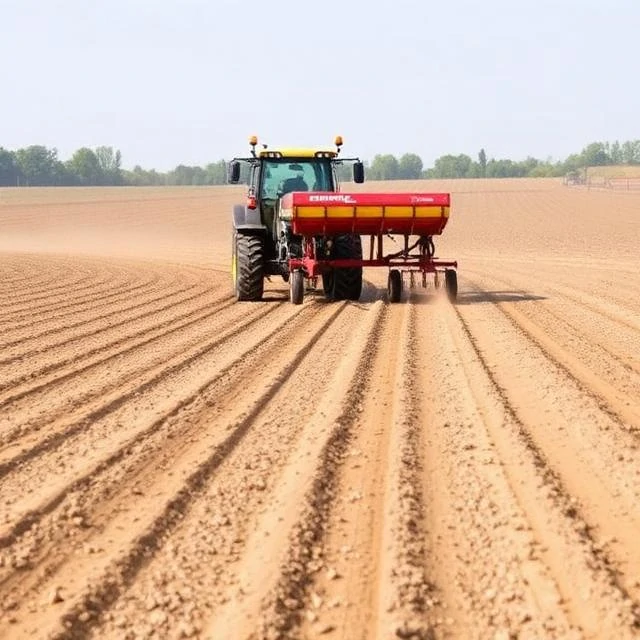
A seeder, or seed drill, is a machine that plants seeds in the soil at a controlled rate and depth. It replaces the hand-sowing that dominated agriculture for thousands of years, and it is one of the tools that made large-scale farming possible.
The basic design has not changed much since Jethro Tull's drill in 1701: a hopper holds the seed, a metering mechanism drops it at a set rate, and tubes or openers place it into the soil. Modern seeders carry GPS, variable-rate controllers, and sensors that monitor each row. Some plant multiple crops at once, or apply fertiliser alongside the seed.
Types in use
- Row crop planters: precise spacing for maize, soybeans, sunflowers
- Grain drills: narrow rows for wheat, barley, oats
- No-till drills: cut through residue without prior tillage
- Broadcast seeders: spread seed on the surface, then harrow in
Depth control is the key variable. Too shallow and the seed dries out. Too deep and it exhausts its reserves before reaching light. A well-calibrated seeder puts every seed at the same depth and spacing, which is what even emergence and even yield depend on.
Comments
No comments yet. Be the first to share a thought.
Leave a comment