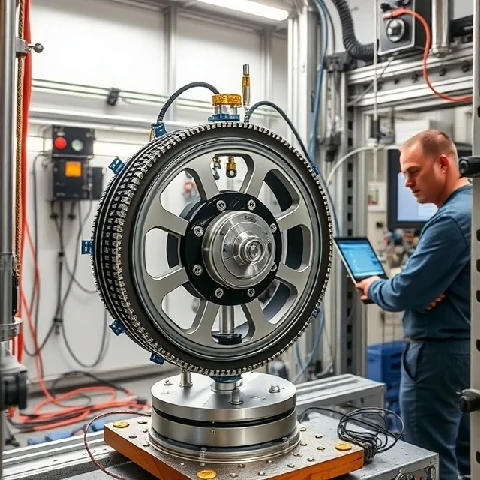
A flywheel stores rotational kinetic energy. A heavy rotor spins on low-friction bearings. When energy is needed, the rotor's momentum drives a generator. When energy is cheap, a motor spins it faster. The faster it spins, the more energy it holds. The energy scales with the square of the speed.
Flywheels have been used for centuries. Potters use them to keep clay spinning. Steam engines used them to smooth power delivery. Modern flywheels use composite rotors and magnetic bearings to spin at tens of thousands of revolutions per minute in a vacuum. They charge and discharge quickly, making them ideal for short bursts of power.
The main uses are grid frequency regulation and uninterruptible power supplies. A flywheel can respond in milliseconds, faster than most batteries. It handles millions of cycles with little wear. The limits are energy density and duration. Flywheels store small amounts of energy and discharge in seconds to minutes. They complement batteries rather than replace them.
Key features
- Fast response
- Long cycle life
- Low energy density
- Short duration
- Vacuum and magnetic bearings
Comments
No comments yet. Be the first to share a thought.
Leave a comment