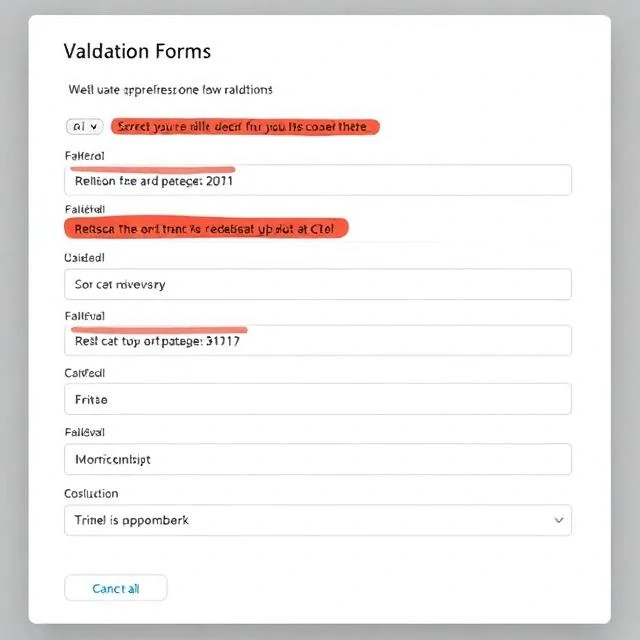
Data validation checks that data meets defined rules before it enters a system. Is the email address formatted correctly? Is the age within a plausible range? Is the required field filled in? Is the postal code valid for the country? Validation catches errors at the point of entry, which is the cheapest place to fix them. A validation rule that rejects a malformed phone number saves a customer service call later.
Validation rules come in several forms. Type checks confirm the value is the right data type. Range checks confirm it falls within acceptable bounds. Format checks confirm it matches a pattern, like an email or a date. Referential checks confirm it points to an existing record. Cross-field checks confirm that related fields are consistent, like a shipping address matching the billing country. Each rule catches a different class of error. The challenge is balancing strictness against usability. Rules that are too strict reject valid data. Rules that are too loose let errors through. A form that rejects apostrophes in names fails real customers. A form that accepts any string as a date stores garbage. Validation should also provide clear feedback. An error message that says "invalid input" helps nobody. A message that says "date must be in YYYY-MM-DD format" tells the user exactly what to fix.
Validation rule types
- Type — correct data type
- Range — within minimum and maximum bounds
- Format — matches a required pattern
- Referential — points to an existing record
- Cross-field — consistent with related fields
- Required — not empty or null
Validation is a gate. It stops bad data before it spreads. The gate needs to be strict enough to catch errors and flexible enough to admit valid data.
Comments
No comments yet. Be the first to share a thought.
Leave a comment