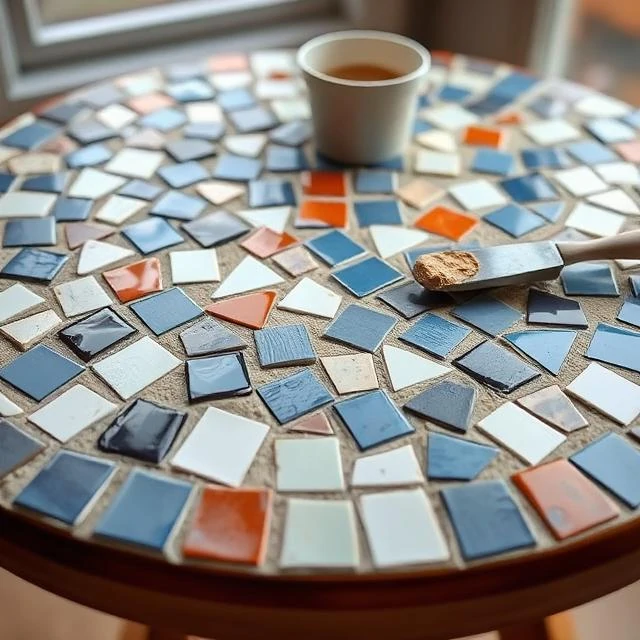
Mosaic turns small pieces of stone, glass, ceramic, or shell into a larger image. The pieces are called tesserae. They are set into a bed of mortar or adhesive, then grouted to fill the gaps. From a distance the picture reads clearly. Up close it breaks into hundreds of individual chips, each one placed by hand.
The craft is ancient. Roman floors, Byzantine church walls, and Islamic tile panels all used mosaic to survive foot traffic and centuries of weather. Modern makers work on tabletops, garden stepping stones, backsplashes, and small framed panels. The materials are forgiving. Broken tile, old china, and beach glass all find a second life.
Ways to set tesserae
- Direct method — pieces glued straight onto the final surface
- Indirect method — pieces arranged face-down on paper, then transferred
- Double indirect — a second paper layer for large or complex works
Grout color changes everything. Dark grout makes bright tesserae pop. Light grout softens the whole panel and hides uneven spacing. Beginners often rush the layout. The best mosaics reward slow, deliberate placement.
Comments
No comments yet. Be the first to share a thought.
Leave a comment