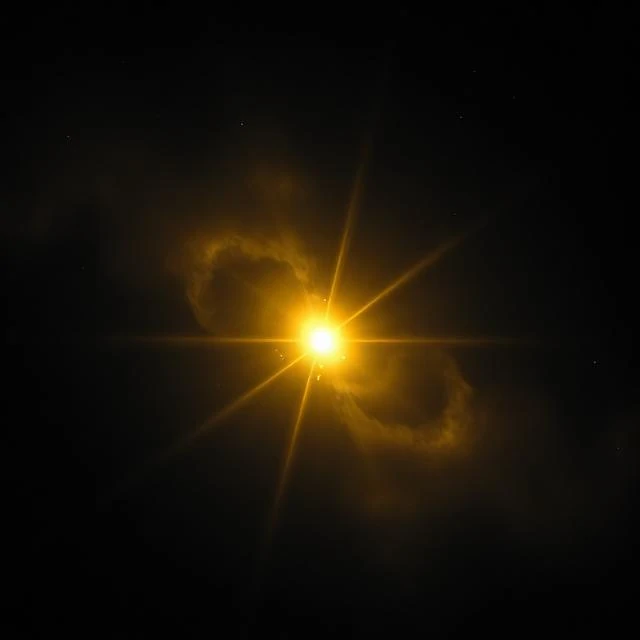
A protostar is a young star still in the process of forming. It begins as a dense clump of gas and dust inside a molecular cloud. Gravity pulls the clump together, and as it collapses, it heats up. The center grows hotter and denser, but it is not yet hot enough for nuclear fusion. The protostar shines by converting gravitational energy into heat, not by fusing hydrogen.
The collapse takes time. A low-mass protostar may take millions of years to reach the main sequence. A high-mass protostar may take only a few hundred thousand years. During this phase, the protostar is surrounded by a disk of gas and dust. Some of that material falls onto the protostar. Some of it may form planets. Some is blown away by jets and outflows.
Protostars are hidden inside their birth clouds. Visible light cannot penetrate the dust. Infrared and radio telescopes can see through it, revealing the protostar and its disk. The James Webb Space Telescope has observed protostars in unprecedented detail, capturing the jets and outflows that accompany their formation.
The moment a protostar ignites hydrogen fusion, it becomes a true star. That moment marks the end of its birth and the beginning of its long life on the main sequence.
Comments
No comments yet. Be the first to share a thought.
Leave a comment