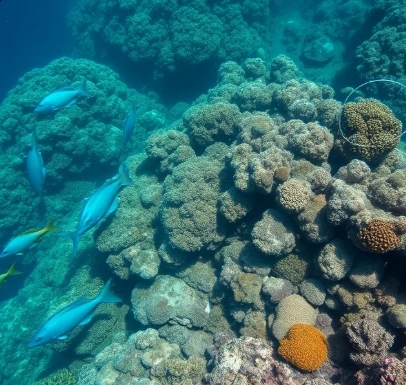
A marine ecosystem comprises the interacting community of organisms and the physical and chemical environment in which they live. Boundaries can be drawn around a tide pool, a kelp forest, a coral reef, an estuary, or an entire ocean basin, depending on the scale of interest.
Energy typically enters through photosynthesis by phytoplankton, seaweeds, or seagrasses, or through chemosynthesis at vents and seeps. Nutrients, light, temperature, and substrate shape the structure of the community. Feedbacks between organisms and their environment—such as reef-building by corals or sediment stabilization by seagrasses—create habitats that further influence who can live there.
Marine ecosystems provide food, coastal protection, carbon storage, and cultural value. They are under simultaneous pressure from fishing, pollution, warming, acidification, and habitat destruction. Ecosystem-based management attempts to maintain the integrity of these systems rather than focusing on single species. Long-term observations are essential for distinguishing natural variability from directional change.
Even a small patch of seagrass functions as a self-contained ecosystem with its own producers, consumers, and decomposers.
Comments
No comments yet. Be the first to share a thought.
Leave a comment