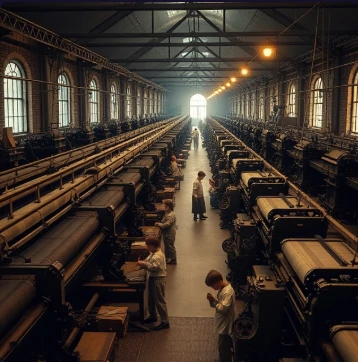
Before the 18th century, most people farmed. Then factories, steam engines, and railways changed everything. Industrialization is the development of manufacturing in a society. It moves production from homes and fields to factories, draws people to cities, and transforms family life, work, and politics.
It began in Britain around 1760 and spread to Europe, North America, and later Asia. Early factories were dangerous. Children worked long hours. Cities grew crowded and polluted. Over time, labor movements, regulations, and technology improved conditions.
Consequences
- Urbanization: people move from rural areas to cities
- New social classes: industrial bourgeoisie and proletariat
- Changed family structures: smaller households, separate work and home
- Environmental impact: pollution, resource depletion
- Economic growth: higher productivity and living standards
Industrialization is not a single event. It unfolds in stages. Some countries industrialized early. Others are industrializing now. Each path is shaped by local politics, resources, and global markets.
Comments
No comments yet. Be the first to share a thought.
Leave a comment