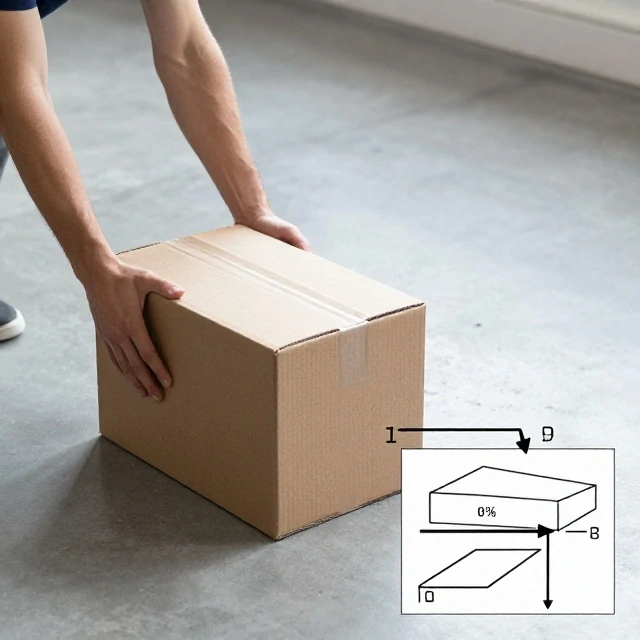
An applied force is a push or pull that a person or object exerts on another object. You push a door. A hammer hits a nail. A magnet pulls a paper clip. The force comes from contact or from a field. Applied force is the most intuitive kind of force. It is the one you feel when you push something.
In physics problems, applied force is often the driving force. A box on a floor is pushed by an applied force. Friction opposes it. Gravity pulls down. The normal force pushes up. The net force determines the acceleration. If the applied force is greater than friction, the box accelerates. If it is less, the box stays still.
Applied force in context
- Direction matters: forces are vectors.
- Magnitude matters: measured in newtons.
- Point of application matters: where the force is applied affects rotation.
- Applied force can be contact or non-contact.
- It is one of many forces acting on an object.
An applied force does not always cause motion. Push a wall and it does not move. The wall pushes back with an equal and opposite force. That is Newton's third law. The net force on the wall is zero. The net force on you is zero. Nothing accelerates. Applied force is only one part of the picture. Free-body diagrams help. Draw the object. Draw every force acting on it. Add them as vectors. The sum is the net force. The net force determines the motion. Applied force is usually the one you control. You decide how hard to push. The other forces respond. That is the essence of mechanics.
Comments
No comments yet. Be the first to share a thought.
Leave a comment