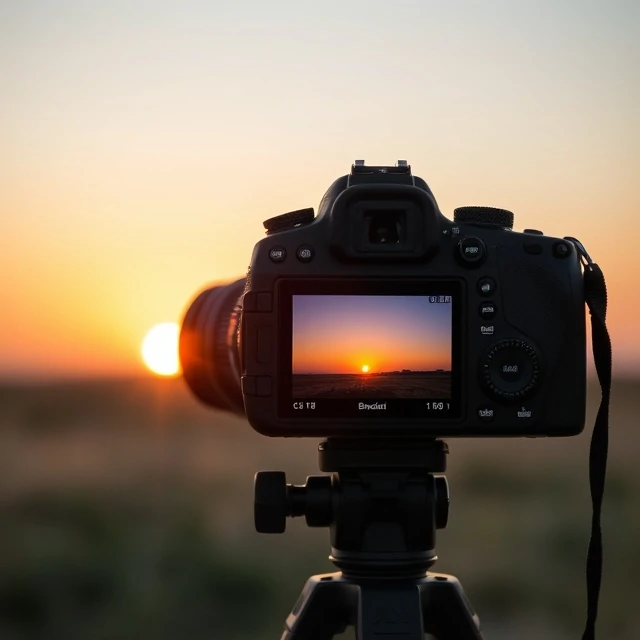
Bracketing means taking several exposures of the same scene at different settings. The most common form is exposure bracketing: one shot at the metered exposure, one brighter, one darker. The goal is to ensure at least one frame is correctly exposed, or to combine them later into an HDR image. Bracketing is insurance. It is also a creative tool.
Film photographers used bracketing because they could not see the result until the film was developed. Digital photographers use it less often for exposure, since the histogram shows the result immediately. But bracketing remains useful for HDR, for scenes with extreme dynamic range, and for critical work where a reshoot is impossible. Some cameras automate the process, firing three, five, or seven frames in quick succession. Others require manual adjustment. Bracketing can also apply to focus, white balance, or flash output. Focus bracketing captures a series of images at different focus distances, later stacked for macro photography with extended depth of field.
Types of bracketing
- Exposure. Varying shutter speed or aperture.
- Focus. Varying the focus distance for stacking.
- White balance. Varying color temperature.
- Flash. Varying flash output for different lighting ratios.
Bracketing is not a substitute for understanding exposure. It is a way of managing uncertainty when the scene is difficult.
Comments
No comments yet. Be the first to share a thought.
Leave a comment