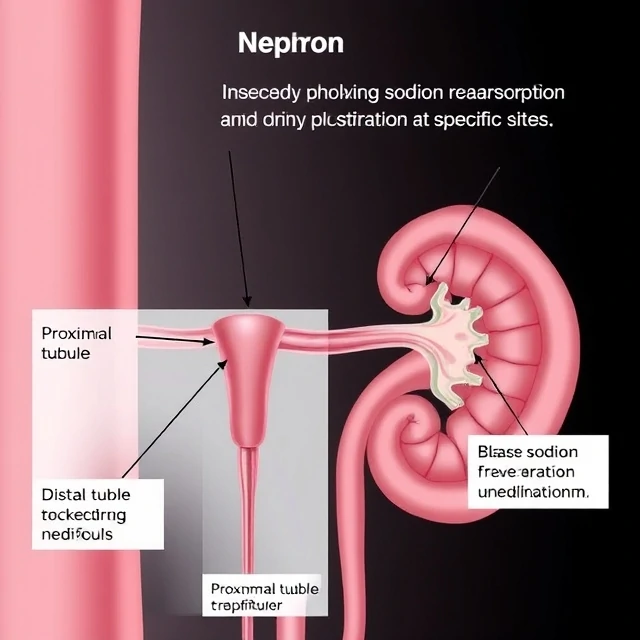
Diuretics make you urinate. That simple action is one of the most effective ways to lower blood pressure and relieve fluid overload. They work in the kidney, blocking the reabsorption of sodium and water so more of both leave the body. The result is less fluid in the bloodstream, less pressure on the heart, and less swelling in the legs and lungs.
The main classes act on different parts of the nephron. Thiazides like hydrochlorothiazide work in the distal tubule and are first-line for hypertension. Loop diuretics like furosemide act on the loop of Henle, producing a much stronger effect, and are used for heart failure and edema. Potassium-sparing diuretics like spironolactone work in the collecting duct and help the body hold onto potassium. Combining a thiazide or loop with a potassium-sparing agent is common to balance electrolytes.
Practical points:
- Electrolytes. Diuretics can lower potassium and sodium. Regular blood tests are needed.
- Timing. Take in the morning to avoid nighttime urination.
- Dehydration. Too much diuretic can cause dizziness and kidney problems.
- Gout. Thiazides and loops can raise uric acid and trigger attacks.
Diuretics are also used for conditions like cirrhosis and nephrotic syndrome, where fluid builds up for different reasons.
Comments (2)
Leave a comment