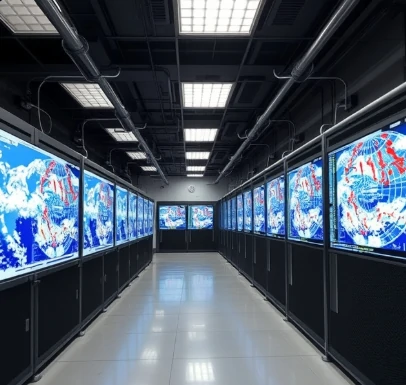
Modern weather forecasts rest on numerical weather prediction. Computers solve the mathematical equations that describe atmospheric motion, temperature, moisture, and pressure, starting from the best available observations.
The atmosphere is divided into a three-dimensional grid. At each grid point the model calculates how the variables will change over short time steps. The process is repeated forward in time to produce a forecast. Higher resolution and more sophisticated physics improve accuracy but demand greater computing power.
Ensemble systems run multiple slightly different versions of the model to estimate uncertainty. Global models cover the entire planet; regional models focus on smaller areas with finer detail. Continuous data assimilation keeps the models aligned with the latest observations.
- Uses mathematical models on computers
- Starts from current observations
- Produces forecasts hours to weeks ahead
- Includes ensemble methods for uncertainty
Comments
No comments yet. Be the first to share a thought.
Leave a comment