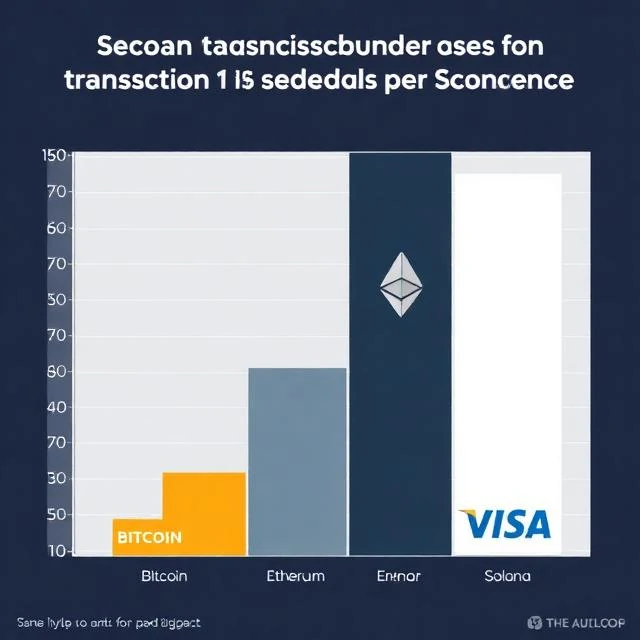
Throughput measures how many transactions a blockchain can process per second. Bitcoin handles about 7. Ethereum handles around 15 on mainnet. Solana claims tens of thousands. Visa processes around 24,000 per second at peak. The gap between crypto and traditional payment networks is the throughput problem. When a chain hits its limit, fees rise and users wait. Throughput is not just a technical metric. It determines whether a blockchain can serve as a payment network or only as a settlement layer.
Throughput depends on block size, block time, and transaction size. Bigger blocks hold more transactions. Faster blocks add them more often. Smaller transactions fit more per block. Each parameter has trade-offs. Bigger blocks require more bandwidth and storage, which makes nodes more expensive to run. Faster blocks increase the rate of chain reorganizations. Smaller transactions may sacrifice features. Layer 2 solutions increase effective throughput by processing transactions off-chain and settling batches on-chain. Rollups can push effective throughput into the thousands per second. The base chain does not need to handle every transaction. It only needs to settle the batches.
Throughput by network
- Bitcoin — 7 TPS
- Ethereum mainnet — 15 TPS
- Solana — thousands to tens of thousands TPS
- Rollups — hundreds to thousands TPS effective
- Visa — 24,000 TPS peak
Throughput alone does not make a chain useful. Security and decentralization matter too. A fast chain with five validators is not a good trade.
Comments
No comments yet. Be the first to share a thought.
Leave a comment