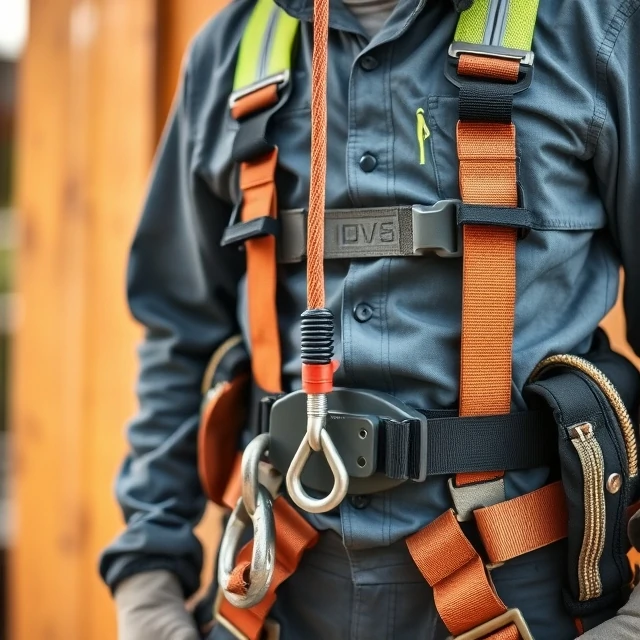
A safety harness protects workers from falls at height. It is a body harness worn over the shoulders, chest, and legs. It is connected to a lanyard, which is connected to an anchor point. If the worker falls, the harness and lanyard catch them and distribute the force across the body. The harness is not a luxury. It is a legal requirement in most jurisdictions for work above a certain height. Falls are the leading cause of death in construction. The harness saves lives.
A safety harness has several components. The harness itself has straps, buckles, and D-rings. The lanyard connects the harness to the anchor. It can be a shock-absorbing lanyard, which deploys a rip-stitch pack to slow the fall, or a self-retracting lifeline, which locks and retracts. The anchor point must be rated for the load, usually 5,000 pounds per worker. The system must be inspected before each use. A frayed strap, a bent D-ring, or a deployed shock pack means the harness is unsafe. It must be removed from service.
Safety harnesses must be worn correctly. The straps must be snug but not too tight. The chest strap must be at chest level. The leg straps must be snug. The D-ring must be at the center of the back. The worker must be trained in the use of the harness and the rescue plan. A fall arrest system is not a fall prevention system. It does not prevent the fall. It catches the worker after the fall. The worker may still be injured or suspended. A rescue plan is required. The safety harness is the last line of defense. It is not the first.
Comments
No comments yet. Be the first to share a thought.
Leave a comment