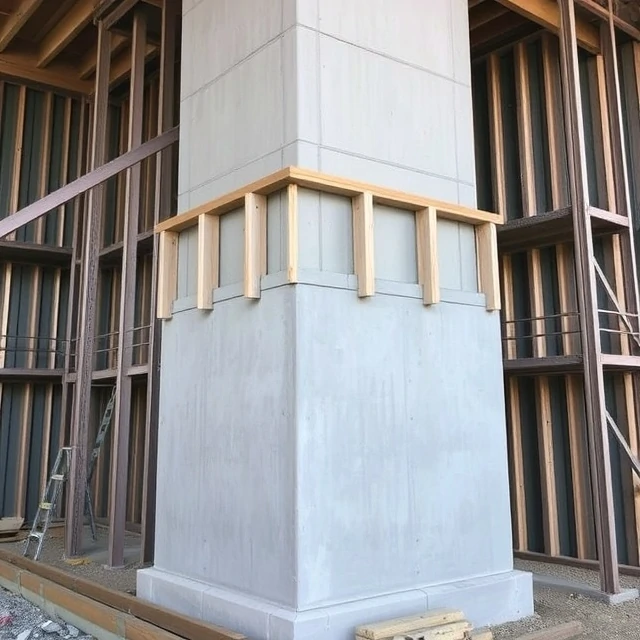
Formwork is temporary molds that hold concrete in shape until it cures. Concrete is a liquid when it is placed. It needs a mold to contain it and give it the desired shape. Formwork is that mold. It is made of wood, steel, aluminum, or plastic. It is built to the dimensions of the finished element. It is braced to resist the pressure of the wet concrete. It is oiled so the concrete does not stick. After the concrete cures, the formwork is removed. It is reused many times.
Formwork is a major cost in concrete construction. It can account for 40 to 60 percent of the cost of a concrete structure. The design of the formwork affects the speed, the quality, and the safety of the pour. A well-designed form is strong, stable, and easy to strip. A poorly designed form can blow out, causing a collapse and a dangerous spill of wet concrete. Formwork failures can kill workers.
Formwork systems come in several types. Traditional timber formwork is built on site for each element. Engineered formwork systems use prefabricated panels that are assembled quickly. Flying forms are large table forms that are lifted by crane from floor to floor. Slip forms move continuously as the concrete is placed, used for towers and silos. Each system has its own advantages. The choice depends on the project, the budget, and the schedule. Formwork is temporary. Its effect is permanent.
Comments
No comments yet. Be the first to share a thought.
Leave a comment