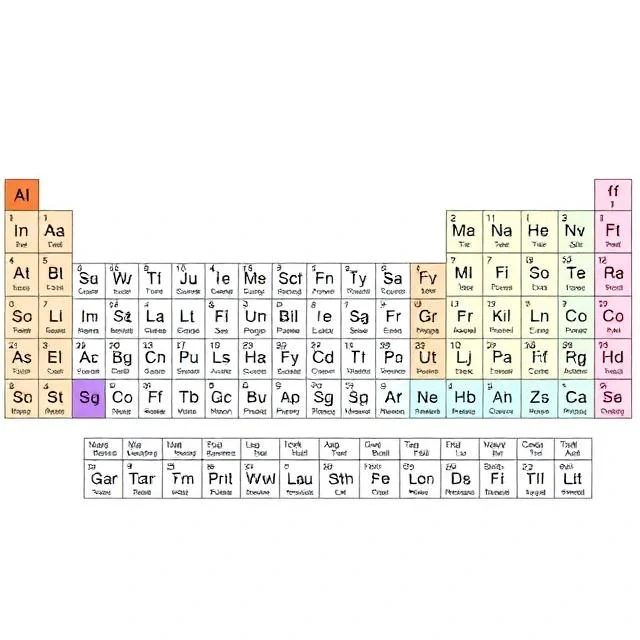
Dmitri Mendeleev published the first widely recognized periodic table in 1869. He arranged the elements by atomic weight and noticed that properties repeated periodically. He left gaps for elements that had not yet been discovered and predicted their properties. When gallium and germanium were found, his predictions matched. The periodic table became the organizing framework of chemistry.
The modern periodic table arranges elements by atomic number, not atomic weight. It has 118 elements, organized into periods (rows) and groups (columns). Elements in the same group have the same number of valence electrons and similar chemical properties. Group 1 elements are alkali metals. Group 18 elements are noble gases. The table is divided into blocks: s, p, d, and f, based on the electron sublevel being filled.
The periodic table reveals trends. Atomic radius decreases across a period and increases down a group. Ionization energy increases across a period and decreases down a group. Electronegativity follows the same pattern. These trends are explained by the increasing nuclear charge and the shielding effect of inner electrons.
The periodic table is more than a chart. It is a predictive tool. Knowing the position of an element tells you its properties, its reactivity, and its likely compounds. It is the map of the chemical world.
Comments
No comments yet. Be the first to share a thought.
Leave a comment