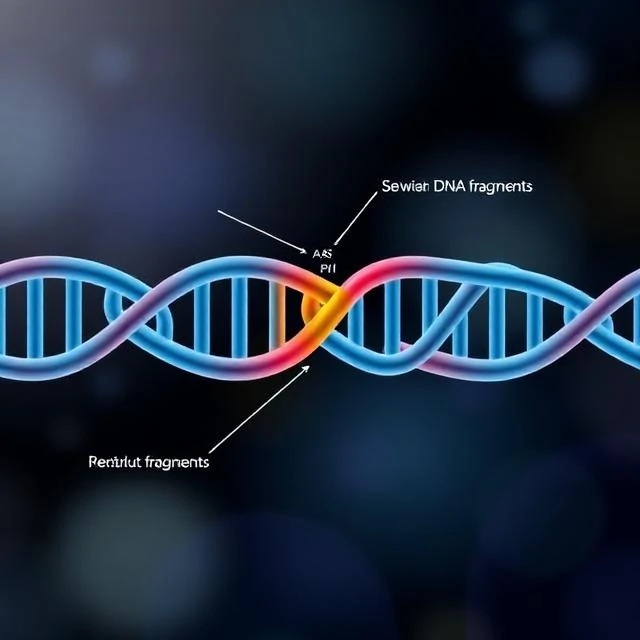
DNA is cut and pasted in molecular biology labs. The cutting is done by restriction enzymes. The pasting is done by ligase. A ligase is an enzyme that joins DNA fragments together by forming a phosphodiester bond between the 3' hydroxyl end of one fragment and the 5' phosphate end of another. Without ligase, gene cloning would be impossible.
Ligases are essential in the cell as well. DNA ligase seals nicks in the DNA backbone during replication and repair. When the replication machinery copies DNA, it produces short fragments that must be joined. Ligase does the joining. When DNA is damaged, repair pathways use ligase to restore the integrity of the strand. Without it, the genome would fall apart.
In the lab, T4 DNA ligase is the most commonly used. It comes from bacteriophage T4 and works efficiently at room temperature. It joins both sticky ends, which are complementary single-stranded overhangs, and blunt ends, which have no overhang. Sticky-end ligation is more efficient because the complementary overhangs anneal before the ligase seals the bond.
Ligase is a workhorse of genetic engineering. It is used in cloning, library construction, and next-generation sequencing library preparation. It is a small enzyme with a big job: holding the genome together and letting scientists build new ones.
Comments
No comments yet. Be the first to share a thought.
Leave a comment