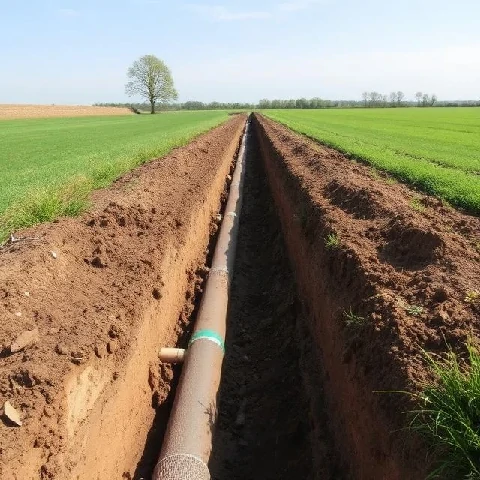
Wet soil drowns roots. Tile drainage removes excess water from the soil profile by burying a network of perforated pipes below the surface. Water enters through the perforations and flows to an outlet, lowering the water table in the field above.
The practice transformed farming in flat, heavy soils across Europe and North America. Fields that were too wet to work in spring became productive. Yields improved because roots could grow deeper and access nutrients without waterlogging.
Common tile drainage components
- Perforated plastic or clay pipes
- Gravel envelope around pipes
- Main collector lines
- Outlets to ditches or streams
Drainage has a downside. Nutrients, especially nitrates, move quickly through tile lines into waterways, contributing to algal blooms. Controlled drainage systems that raise or lower the outlet based on season reduce the problem.
Comments
No comments yet. Be the first to share a thought.
Leave a comment