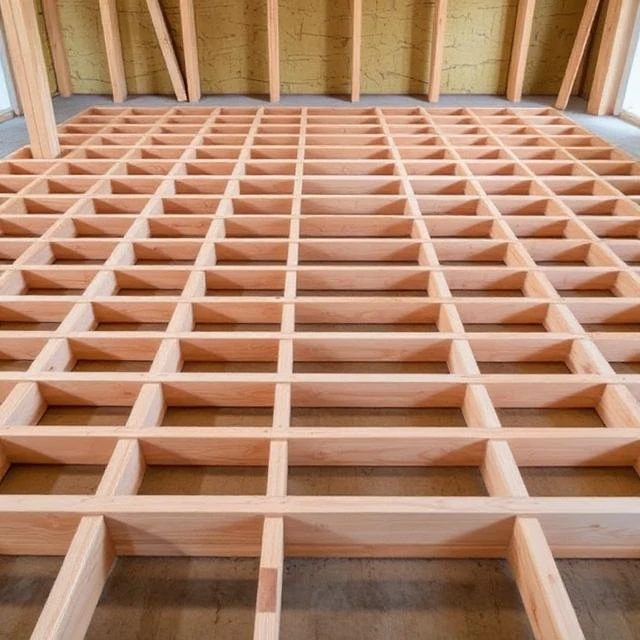
A joist is a horizontal structural member supporting a floor or ceiling. It runs parallel to other joists. It is spaced 12, 16, or 24 inches apart. It spans from wall to wall or beam to beam. It carries the floor load and transfers it to the structure below. A joist is not a beam. It is smaller and more numerous. But it works the same way. The floor above sits on the joists. The ceiling below hangs from them. In the kitchen, the closest equivalent is the oven rack. It is a horizontal member. It supports the baking sheet. It carries the load. It transfers the heat. It is not a joist. But it is a support. It is a rack. It is the joist of the oven. It is the joist of the kitchen.
Joists come in several materials. Solid sawn lumber is common in older homes. Engineered wood products, like I-joists and open-web trusses, are common in new construction. They are lighter, stiffer, and can span longer distances. Steel joists are used in commercial buildings. In the kitchen, the oven rack is usually steel. It is coated. It is sturdy. It is removable. It is the joist of the oven. It is the joist of the meal.
Joists must be installed correctly. They must be level, square, and properly fastened. They must be bridged or blocked to prevent twisting. They must not be notched or drilled in the wrong place. In the kitchen, the oven rack must be level. It must be secure. It must be clean. It must be placed at the right height. The joist is the floor. The rack is the oven. Both are supports. Both are horizontal. Both are the same. The same is the kitchen. The kitchen is the joist. The joist is the cook. The cook is the joist. The joist is the same. The same is the meal. The meal is the joist. The joist is the same.
Comments
No comments yet. Be the first to share a thought.
Leave a comment