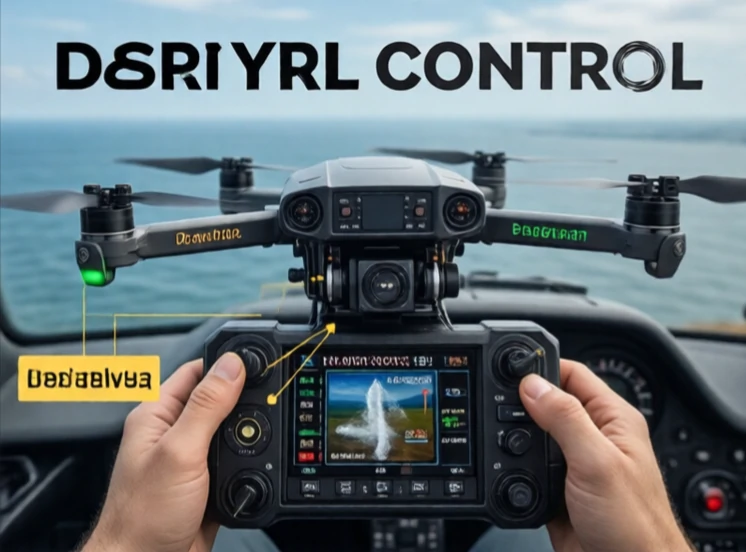
Derivative control responds to the rate of change of error. If the error is shrinking quickly, derivative action reduces the control output. If the error is growing, it increases the output. It is a predictive term. It anticipates where the error is heading and applies the brakes or the gas accordingly.
In a PID controller, derivative action is the D. It adds damping. Without it, a system with high proportional gain oscillates. With it, the system settles faster and overshoots less. The derivative term is calculated from the slope of the error curve over time.
Why derivative control helps
- Reduces overshoot in position control.
- Dampens oscillation.
- Improves stability in fast systems.
- Responds before the error gets large.
- Needs clean sensor data to work well.
Derivative control has a weakness: noise. Differentiating a noisy signal amplifies the noise. A shaky sensor reading looks like a rapidly changing error, and the controller overreacts. Engineers filter the derivative term or use a low-pass filter on the sensor. Some systems omit derivative control entirely and rely on proportional and integral action. But for systems that need fast, precise response, like drone flight controllers or robot arm joints, derivative control is hard to beat. It is the difference between a system that wobbles to a stop and one that glides into place.
Comments
No comments yet. Be the first to share a thought.
Leave a comment