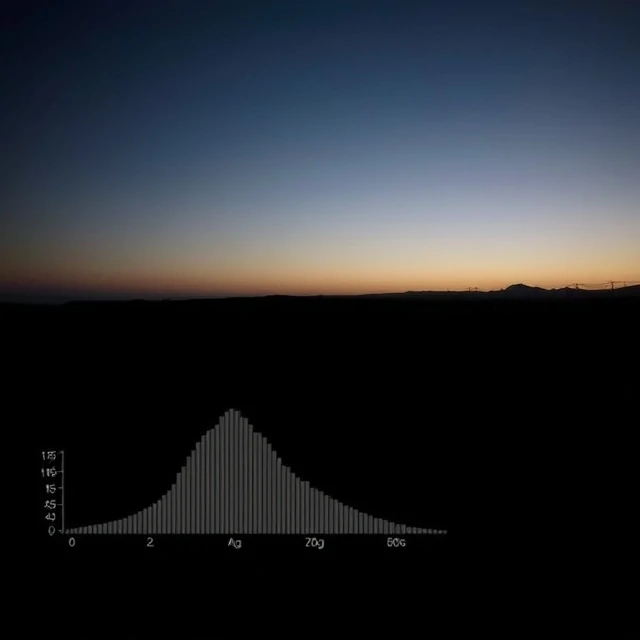
Underexposure is what happens when too little light reaches the sensor. The image is too dark. Shadows lose detail and become pure black. Colors become muddy. The histogram is bunched on the left side. Underexposure can happen for several reasons: the shutter speed is too fast, the aperture is too narrow, the ISO is too low, or the meter was fooled by a bright scene. It can also be intentional, used for a low-key effect where dark, moody images are the goal.
Underexposure is often easier to fix than overexposure. Shadow detail can sometimes be recovered from a RAW file, especially if the underexposure is not too severe. Lifting shadows in post-processing can introduce noise, but modern sensors have good dynamic range. The risk is that the image looks flat or noisy. The solution is to expose correctly in the first place. Check the histogram. If it is bunched on the left, slow the shutter speed, open the aperture, or raise the ISO. A slightly underexposed image is better than an overexposed one, because highlights cannot be recovered. But a correctly exposed image is better than both.
Signs of underexposure
- Histogram. Bunched on the left, with clipping.
- Shadow detail. Lost in pure black.
- Colors. Muddy and desaturated.
- Noise. Lifting shadows reveals noise.
Underexposure is not the same as a dark image. A dark image can be correctly exposed. Underexposure is about losing detail, not about darkness.
Comments
No comments yet. Be the first to share a thought.
Leave a comment