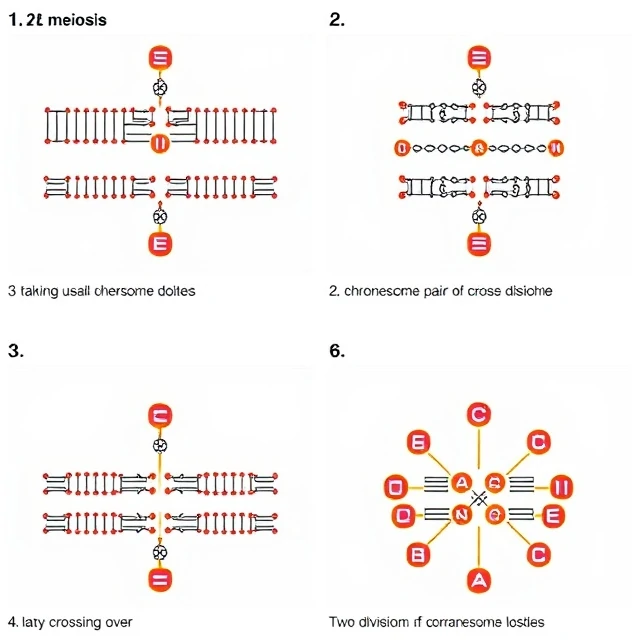
Gametes must contain half the chromosomes of body cells. Meiosis is the specialized cell division that achieves this reduction. One round of DNA replication is followed by two successive divisions, producing four haploid cells from a single diploid precursor.
In meiosis I, homologous chromosomes pair, recombine, and then separate. Meiosis II resembles mitosis and separates sister chromatids. Crossing over during prophase I generates new allele combinations. The resulting genetic diversity is a key advantage of sexual reproduction.
Errors in chromosome segregation produce aneuploid gametes and can lead to conditions such as Down syndrome. Meiosis occurs only in the germline. Understanding its stages is essential for interpreting inheritance patterns and chromosomal disorders.
- Cell division that produces haploid gametes
- Consists of two successive divisions
- Includes recombination between homologs
- Generates genetic diversity
Comments
No comments yet. Be the first to share a thought.
Leave a comment