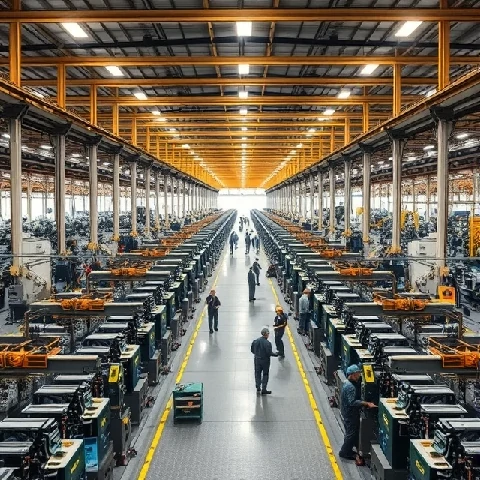
Economies of scale are the cost advantages that come from producing more. A small bakery pays more per loaf than a large factory. The factory can buy flour in bulk, spread the cost of ovens across thousands of units, and negotiate lower shipping rates. As output rises, average cost falls.
The idea is central to business strategy. It explains why companies merge, why factories grow, and why some industries end up dominated by a few giant firms. It also explains why new entrants struggle in capital-intensive markets like airlines or semiconductors.
But bigger is not always better. Beyond a certain point, diseconomies of scale set in. Coordination gets harder. Bureaucracy slows decisions. Workers feel disconnected. The average cost starts to rise again. Managers spend a lot of time trying to find the sweet spot.
Sources of scale economies
- Bulk purchasing discounts
- Specialized machinery and labor
- Spreading fixed costs over more units
- Learning by doing
- Lower cost of capital for large firms
Comments
No comments yet. Be the first to share a thought.
Leave a comment