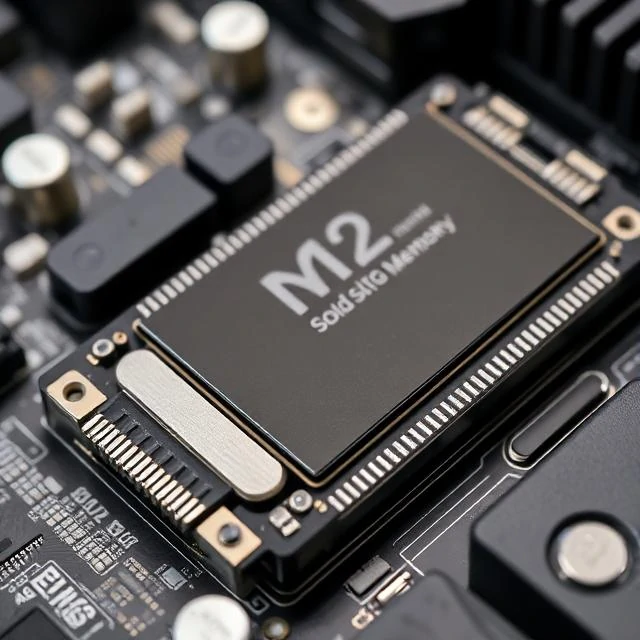
A solid state drive stores data in flash memory with no moving parts. It reads and writes faster than a hard drive because there is no spinning platter or moving head. Access times are measured in microseconds rather than milliseconds. A computer with an SSD boots in seconds instead of minutes. Applications open instantly. File transfers are limited by the network, not the disk. The performance difference is dramatic and immediately noticeable.
SSDs have trade-offs. They cost more per gigabyte than hard drives. They have a limited number of write cycles. Each cell can only be written and erased so many times before it wears out. Controllers manage this by spreading writes across cells, a technique called wear leveling. Modern SSDs last for years under normal use. Enterprise SSDs last longer. The capacity has grown steadily. Drives measured in terabytes are now common. The form factors have shrunk. M.2 drives plug directly into the motherboard, taking up almost no space. NVMe drives use the PCIe bus instead of SATA, which increases speed further. SSDs have become the default for laptops, desktops, and servers. Hard drives remain for bulk storage where cost per gigabyte matters more than speed. The two technologies coexist. They serve different needs.
SSD characteristics
- Fast — microsecond access times
- Silent — no moving parts
- Durable — resistant to shock and vibration
- Expensive — higher cost per gigabyte than HDD
- Limited writes — cells wear out over time
An SSD is fast because it has no moving parts. That simplicity is also why it costs more. You pay for speed.
Comments (2)
Leave a comment