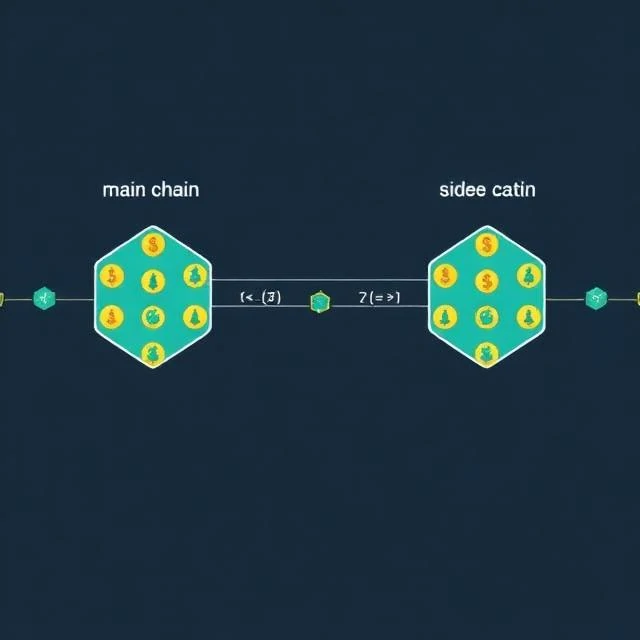
A sidechain is a separate blockchain connected to a main chain. It runs its own consensus and processes its own transactions. Assets move between the two chains through a bridge. The main chain secures the bridge. The sidechain handles the activity. Sidechains can be faster and cheaper than the main chain because they do not inherit all of its constraints. Polygon's PoS chain is a sidechain to Ethereum. It processes transactions quickly and settles to Ethereum periodically.
The trade-off is security. A sidechain has its own validators and its own consensus rules. If those validators collude or the bridge is exploited, users lose funds. That has happened repeatedly. Sidechain bridges have been hacked for hundreds of millions of dollars. Rollups are considered safer because they inherit the base chain's security. Sidechains are independent. That independence is both their strength and their weakness. They can innovate faster and scale further, but they ask users to trust a different set of assumptions. Not every sidechain is risky. Some have robust validator sets and well-audited bridges. The point is that you are trusting something different from the base chain.
Sidechain characteristics
- Independent consensus — own validators and rules
- Bridge connection — assets move via a bridge
- Faster and cheaper — fewer constraints than main chain
- Different security model — does not inherit base chain security
Sidechains are a pragmatic scaling solution. They are not as secure as rollups. They are often good enough.
Comments (2)
Leave a comment