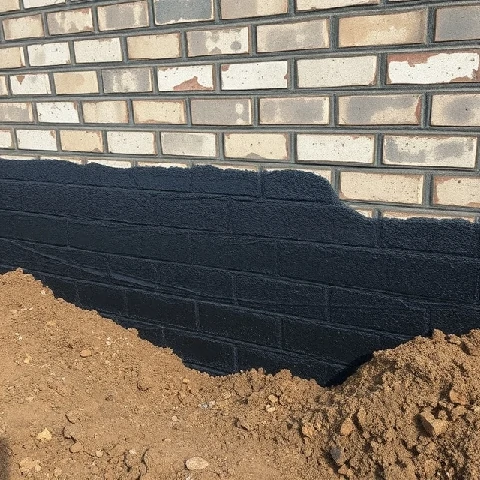
Waterproofing makes a building surface resistant to water penetration. It is the barrier that keeps water out. Water is the most destructive force in construction. It rots wood, corrodes steel, erodes mortar, and grows mold. Waterproofing is not glamorous. It is invisible. It is also essential. A building without waterproofing will fail. The basement will leak. The roof will drip. The walls will stain. The structure will deteriorate.
Waterproofing comes in several forms. Below grade, foundation walls are coated with membranes or bentonite clay. The membrane is a sheet of rubberized asphalt or plastic. The bentonite is a clay that swells when wet. Roofs use membranes, flashing, and sealants. Bathrooms use tile and waterproof backer board. Windows and doors rely on careful flashing and seals. Decks and balconies use coatings and membranes. Each application has its own material and method. The choice depends on the substrate, the exposure, and the budget.
Waterproofing must be continuous. A gap or a tear lets water through. The details matter. The corners, the penetrations, and the transitions are the weak points. The waterproofing must be installed by trained workers. It must be inspected before it is covered. It must be tested. A flood test on a shower pan is a common procedure. A leak test on a roof is another. Waterproofing is a system. It is not a product. It is a process. It must be done right. It must be maintained. It must be respected. It is the shield of the building.
Comments
No comments yet. Be the first to share a thought.
Leave a comment