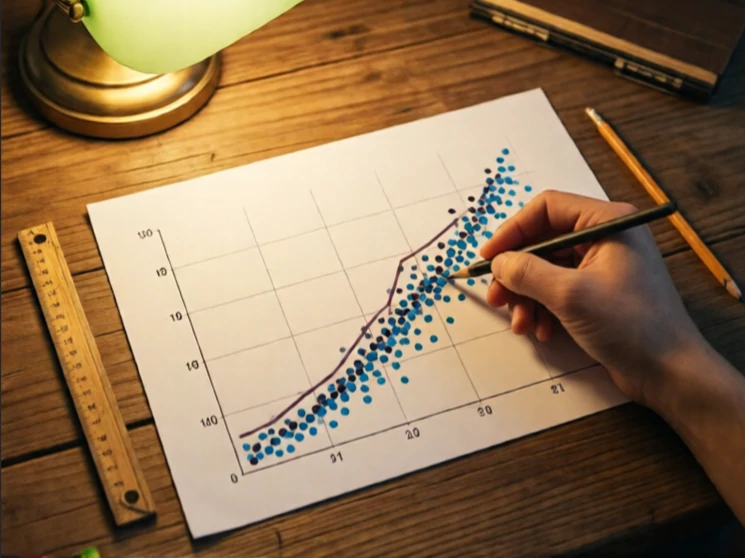
Every retailer knows that swimsuits sell in July. That is not a trend. A trend is a direction of change over time, and trend analysis is the craft of spotting it before it becomes obvious. Analysts collect data points—sales figures, search queries,气温 readings, social media mentions—and look for patterns that repeat or accelerate. The goal is not to predict the future perfectly. It is to reduce surprise.
Methods range from simple moving averages to complex machine learning models. A moving average smooths out weekly noise to reveal a slow rise. Exponential smoothing gives more weight to recent data. Seasonal decomposition separates a trend from recurring cycles, like holiday shopping. Each method has assumptions. Pick the wrong one and you will forecast a boom that never arrives.
Where trends hide
- Point-of-sale data from thousands of stores.
- Google Trends and social media hashtags.
- Patent filings and job postings.
- Shipping manifests and satellite imagery of parking lots.
Trend analysis fails when the world changes abruptly. A pandemic, a war, a viral video can break any model. The best analysts combine quantitative signals with qualitative judgment. They know that a chart is not a crystal ball.
Comments
No comments yet. Be the first to share a thought.
Leave a comment