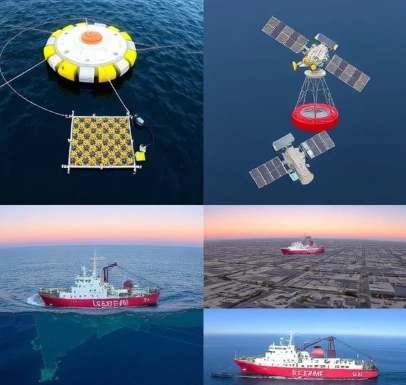
No single instrument can measure the ocean adequately. Ocean observing systems integrate satellites, drifting floats, moored buoys, research ships, autonomous vehicles, and coastal stations into coordinated networks that deliver continuous data on physical, chemical, and biological conditions.
The Global Ocean Observing System and its regional components set standards, coordinate deployments, and ensure open data access. Core variables include temperature, salinity, currents, sea level, oxygen, nutrients, and phytoplankton biomass. Near-real-time delivery supports weather and climate prediction, marine safety, and ecosystem management.
Sustaining the observing system requires long-term funding, international cooperation, and technological innovation to reduce cost and expand coverage into ice-covered and deep waters. Gaps remain, especially in the deep ocean, the Southern Ocean, and biogeochemical measurements. Each new autonomous platform or satellite mission adds a piece to the overall picture of a changing ocean.
- Coordinated network of ocean measuring platforms
- Combines remote and in-situ observations
- Supports forecasting and climate assessment
- Requires sustained international commitment
Comments
No comments yet. Be the first to share a thought.
Leave a comment