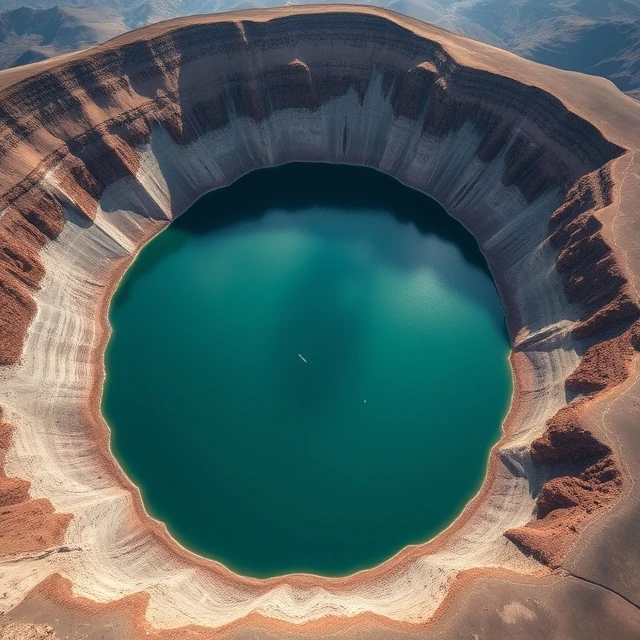
Some volcanic eruptions empty the magma chamber so thoroughly that the ground above collapses. A caldera is the large, basin-shaped depression that results. Diameters can reach tens of kilometers, far larger than ordinary craters.
Yellowstone, Crater Lake, and Santorini occupy calderas. After collapse, the floor may fill with a lake or host new lava domes and vents. Resurgent uplift sometimes pushes the center upward again as fresh magma accumulates below.
Caldera-forming eruptions rank among the most explosive known and can inject enough ash and gas into the atmosphere to affect global climate. Geologists map the surrounding ignimbrite sheets to reconstruct the scale of past events. The steep walls and flat floors of calderas remain unmistakable even after long erosion.
- Large volcanic collapse depression
- Forms after major magma-chamber evacuation
- Often hosts lakes or renewed volcanic activity
- Associated with highly explosive eruptions
Comments (2)
Leave a comment