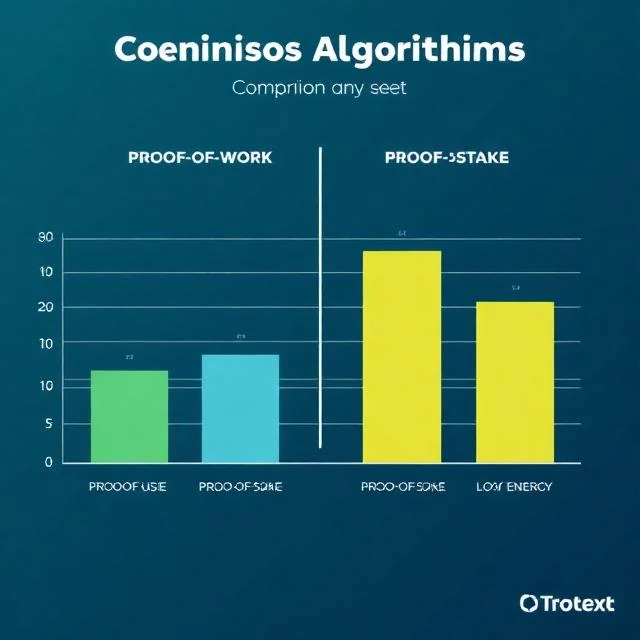
A consensus algorithm is the rulebook that lets nodes agree. Proof-of-work, proof-of-stake, delegated proof-of-stake, and practical Byzantine fault tolerance are the common ones. Each makes different trade-offs between speed, security, and energy use. Proof-of-work is battle-tested and expensive to attack. It is also slow and consumes enormous electricity. Proof-of-stake is faster and energy-efficient, but critics argue it favors large holders and has not been tested as long.
The choice of algorithm shapes everything about a chain. Throughput, finality time, hardware requirements, and decentralization all depend on it. A chain using delegated proof-of-stake can process thousands of transactions per second but concentrates power in a small number of validators. A proof-of-work chain distributes mining power more widely but cannot scale to that speed. There is no free lunch. Scalability, security, and decentralization pull against each other. The consensus algorithm is where those tensions get resolved.
Common algorithms compared
- Proof of work — secure, slow, energy-intensive
- Proof of stake — efficient, faster finality, plutocratic tendencies
- Delegated proof of stake — high throughput, fewer validators
- PBFT — fast finality, suits permissioned networks
Newer chains experiment with hybrids. The search for a better balance is ongoing.
Comments
No comments yet. Be the first to share a thought.
Leave a comment