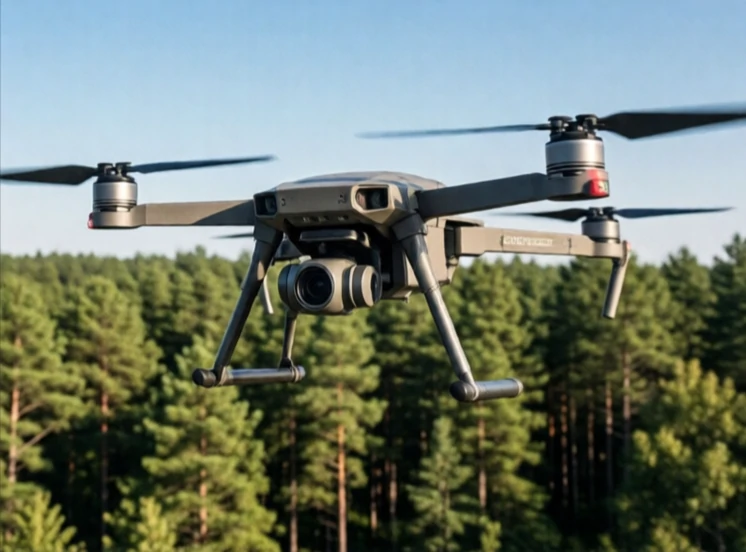
A drone is an unmanned aerial vehicle. It flies without a pilot on board, controlled remotely or autonomously. The term covers everything from toy quadcopters to military Predators to fixed-wing survey aircraft.
Modern drones owe their existence to advances in batteries, brushless motors, and inertial sensors. The quadcopter layout, four rotors in a square, is inherently unstable. It stays in the air only because a flight controller adjusts motor speeds hundreds of times per second. That technology became cheap in the 2010s, and drones exploded into consumer and commercial markets.
Types of drones
- Quadcopter: four rotors, stable, popular for photography.
- Fixed-wing: airplane-like, long range, used for mapping.
- Hybrid VTOL: vertical takeoff and forward flight.
- Micro drone: palm-sized, indoor use.
- Large UAS: military and cargo, beyond line of sight.
Drones do work that is dull, dirty, or dangerous. They inspect power lines, spray crops, map mines, and deliver medical supplies in remote areas. They also raise concerns about privacy, airspace safety, and weaponization. Regulations vary widely. In many countries, drone pilots must register, keep the aircraft in sight, and avoid airports. The technology is advancing faster than the rules. That tension will define the next decade of drone use.
Comments
No comments yet. Be the first to share a thought.
Leave a comment