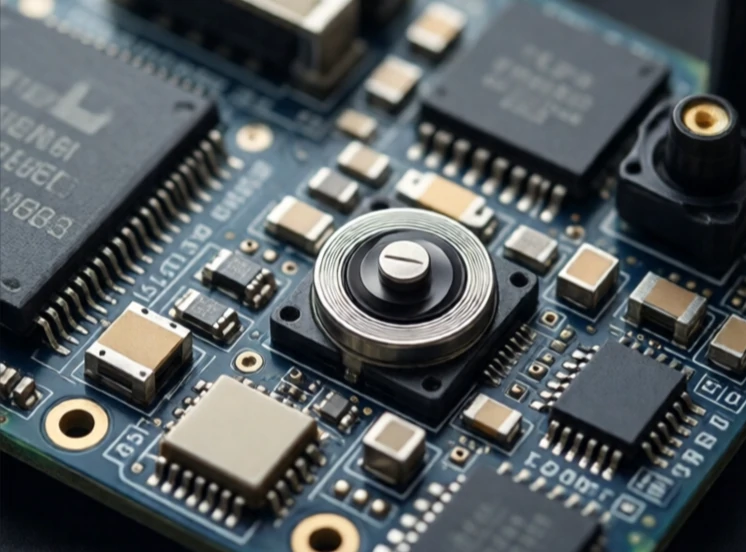
A controller manages a robot's operation. It reads sensors, runs algorithms, and sends commands to actuators. It is the brain, or at least the part of the brain that turns decisions into action.
Controllers range from tiny microcontrollers on a single joint to industrial PCs coordinating dozens of axes. A drone flight controller stabilizes the aircraft hundreds of times per second. A robot arm controller plans trajectories, enforces limits, and communicates with a vision system. The hardware might be a custom board, a PLC, or a standard computer running real-time software.
What a controller does
- Reads sensor inputs at fixed intervals.
- Runs control loops like PID or model predictive control.
- Sends position, velocity, or torque commands to actuators.
- Handles safety monitoring and emergency stops.
- Communicates with other systems over networks.
Real-time performance is critical. A controller that responds late can cause oscillation, instability, or crashes. Deterministic timing matters more than raw speed. That is why many robots use real-time operating systems or dedicated microcontrollers rather than general-purpose computers. The controller is also where safety lives. It enforces joint limits, monitors for faults, and brings the robot to a safe state when something goes wrong. A good controller is invisible when everything works and decisive when it does not.
Comments
No comments yet. Be the first to share a thought.
Leave a comment