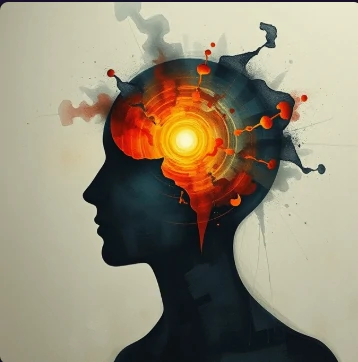
Thoughts, perceptions, feelings, and the sense of a continuing self constitute what people ordinarily call the mind. Psychology treats the mind as the set of cognitive and affective processes that enable an organism to represent, interpret, and act upon the world.
The mind is studied through behavior, self-report, and neural measurement. Debates continue over the relation between mind and brain, the possibility of unconscious mental processes, and whether nonhuman animals or machines possess minds in any comparable sense. Cognitive science approaches the mind as an information-processing system; phenomenological approaches emphasize lived experience.
Disorders of mind appear as disruptions of thought, mood, perception, or identity. Interventions ranging from psychotherapy to medication to environmental change aim to restore more adaptive functioning. The concept of mind remains indispensable even as its biological basis becomes clearer.
- Set of cognitive and affective processes
- Studied via behavior, experience, and brain measures
- Includes both conscious and unconscious activity
- Central to identity and adaptive functioning
Comments
No comments yet. Be the first to share a thought.
Leave a comment