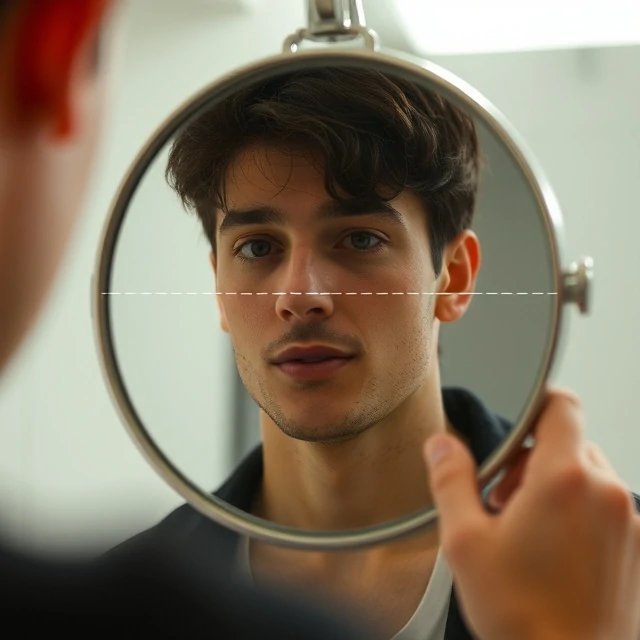
Look in a mirror and you see yourself. Light bounces off the mirror and into your eyes. That is reflection, the bouncing of light or waves off a surface. Reflection follows a simple law: the angle of incidence equals the angle of reflection. Both angles are measured from the normal, a line perpendicular to the surface. A smooth surface produces specular reflection, which is a clear image. A rough surface produces diffuse reflection, which scatters light in many directions. That is why you can see a reflection in a mirror but not in a wall.
Reflection is not just for mirrors. It happens with all waves, including sound and water waves. Echoes are reflected sound waves. Sonar uses reflected sound to map the ocean floor. Radar uses reflected radio waves to detect aircraft and weather. Reflection is also used in optical instruments. Telescopes use mirrors to collect and focus light. Periscopes use mirrors to see around corners. Cameras use mirrors in DSLRs to direct light to the viewfinder. Reflection is one of the most basic behaviors of waves. It shapes how we see the world and how we navigate it.
Reflection facts
- Definition. Bouncing of waves off a surface.
- Law. Angle of incidence equals angle of reflection.
- Specular. Smooth surface, clear image.
- Diffuse. Rough surface, scattered light.
- Applications. Mirrors, sonar, radar, telescopes.
Reflection is not the same as refraction. Reflection bounces off a surface. Refraction bends as it passes through a medium.
Comments
No comments yet. Be the first to share a thought.
Leave a comment