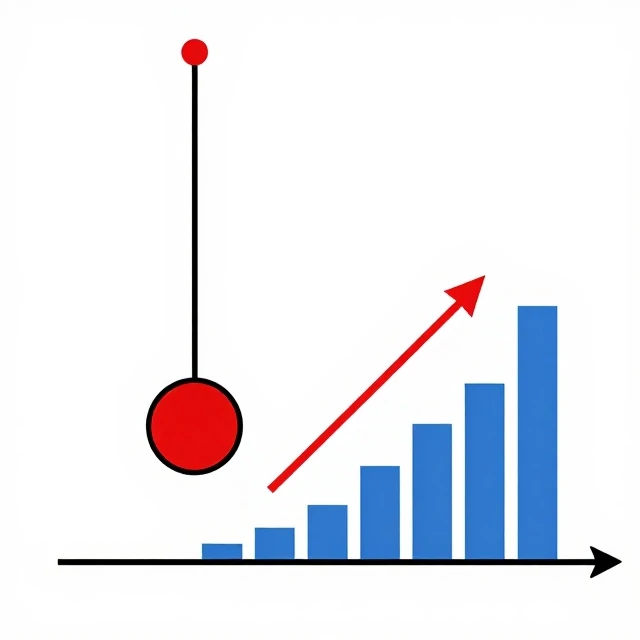
Mechanical energy is the sum of kinetic energy and potential energy. Kinetic energy is motion. Potential energy is position. A moving car has kinetic energy. A stretched spring has potential energy. A pendulum at the top of its swing has potential energy. At the bottom, it has kinetic energy. The total mechanical energy stays constant if no friction or air resistance acts.
The conservation of mechanical energy is a powerful tool. A roller coaster at the top of a hill has potential energy. At the bottom, it has kinetic energy. The sum is the same at every point, ignoring friction. That is why the first hill is always the tallest. The coaster cannot go higher than its starting point unless it has another source of energy.
Mechanical energy in action
- Pendulum: potential to kinetic and back.
- Roller coaster: potential at top, kinetic at bottom.
- Falling object: potential converts to kinetic.
- Bow and arrow: elastic potential to kinetic.
- Hydroelectric dam: gravitational potential to kinetic to electrical.
In the real world, mechanical energy is not perfectly conserved. Friction converts some to heat. Air resistance does the same. That is why a pendulum eventually stops swinging. The energy is still there, but it has changed form. It is now thermal energy, spread among the molecules of the air and the pivot. Mechanical energy is useful because it is easy to convert. It drives turbines, vehicles, and machines. It is the energy of moving parts. When you pedal a bike, you convert chemical energy from food into mechanical energy. When you brake, you convert mechanical energy into heat. The total energy is always conserved. Only the form changes.
Comments
No comments yet. Be the first to share a thought.
Leave a comment