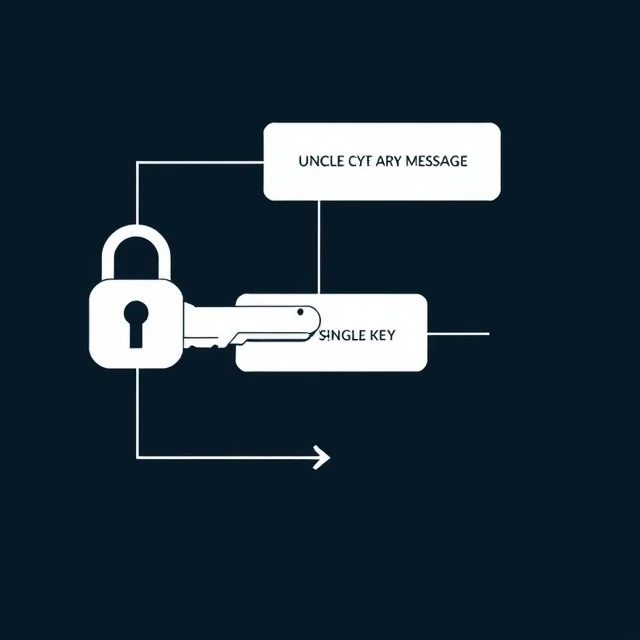
Symmetric encryption uses the same key to encrypt and decrypt. It is fast and efficient. AES, the standard symmetric algorithm, encrypts gigabytes of data in seconds. That speed makes it the workhorse of encryption. Every HTTPS connection, every encrypted disk, every VPN tunnel uses symmetric encryption for the bulk of the data. The challenge is key distribution. If two parties want to communicate securely, they need to share the same key. How do they share it without an eavesdropper learning it?
That problem is solved by asymmetric encryption, which handles the key exchange. The two systems use public-key cryptography to agree on a symmetric key, then switch to symmetric encryption for the actual data. That hybrid approach secures the internet. The symmetric key is used once and discarded, a practice called forward secrecy. Even if the long-term private key is compromised later, past sessions remain secure. Symmetric encryption is not without weaknesses. Weak keys, reused nonces, and bad padding have broken systems that used strong algorithms. Implementation matters more than the algorithm. AES-256 is effectively unbreakable. A system that stores the key in plaintext next to the encrypted data is not.
Common symmetric algorithms
- AES — the standard, used everywhere
- ChaCha20 — stream cipher, fast on mobile devices
- 3DES — legacy, being phased out
- Blowfish — older, still used in some applications
Symmetric encryption is fast, strong, and simple. The hard part is getting the key to the other side safely.
Comments
No comments yet. Be the first to share a thought.
Leave a comment