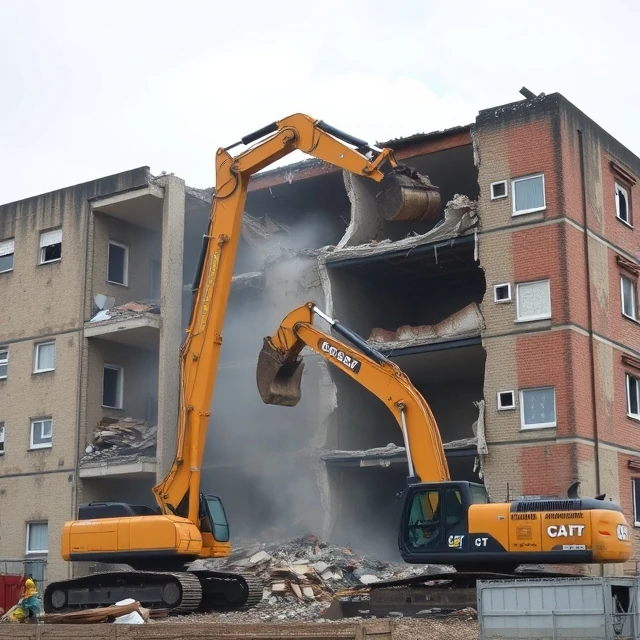
Demolition tears down buildings and structures in a controlled way. It is the opposite of construction. It is also a construction activity. It requires planning, permits, and safety measures. The building must be surveyed for hazardous materials, like asbestos and lead paint. Utilities must be disconnected. Neighboring structures must be protected. The demolition method depends on the building, the site, and the budget. It can be done by hand, by machine, or by explosives.
Demolition methods include manual demolition, mechanical demolition, and implosion. Manual demolition uses hand tools and small equipment for interior strip-outs and selective demolition. Mechanical demolition uses excavators, bulldozers, and high-reach machines to tear down structures. Implosion uses explosives to bring down a building in a controlled collapse. It is used for tall buildings in tight urban sites. It requires precise planning and a large exclusion zone.
Demolition generates enormous waste. Concrete, steel, wood, and debris must be sorted and disposed of. Recycling is increasingly common. Concrete can be crushed and reused as aggregate. Steel can be melted and re-formed. Wood can be chipped and composted. But much demolition waste still goes to landfill. Deconstruction, which carefully disassembles a building to salvage materials, is a more sustainable alternative. It is slower and more expensive. It is also better for the planet. Demolition is a necessary part of the building cycle. It can be done well or badly. The choice matters.
Comments
No comments yet. Be the first to share a thought.
Leave a comment