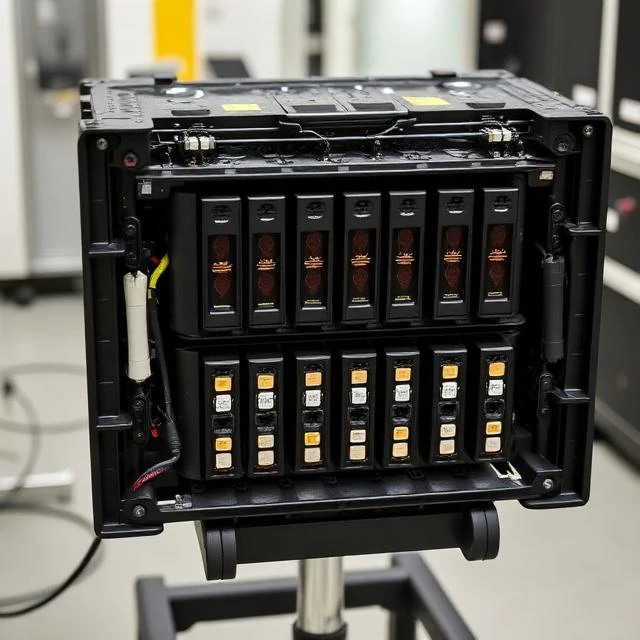
Every car has at least one battery. It stores chemical energy and delivers it as electricity. The conventional lead-acid battery, invented in 1859, still starts most gasoline cars. It provides the burst of current needed to crank the engine and powers the electronics when the engine is off. Once the engine runs, the alternator recharges it.
Electric vehicles use a different kind of battery. A lithium-ion pack, made of thousands of individual cells, stores the energy that drives the motor. It is measured in kilowatt-hours. A typical EV pack holds 60 to 100 kWh, which gives a range of 200 to 400 miles. The pack is heavy, often weighing 1,000 pounds or more, and it sits low in the chassis to improve handling.
Battery chemistry matters. Lead-acid is cheap and reliable but heavy. Lithium-ion is lighter and more energy-dense but more expensive and sensitive to temperature. Solid-state batteries promise higher energy density and faster charging, but they are not yet in mass production. Sodium-ion is emerging as a cheaper alternative for some applications.
Charging speed and battery life are the two concerns drivers ask about most. Fast chargers can add hundreds of miles in 20 minutes. Battery warranties typically cover eight years or 100,000 miles. After that, capacity degrades gradually, but most packs outlast the car.
Comments
No comments yet. Be the first to share a thought.
Leave a comment