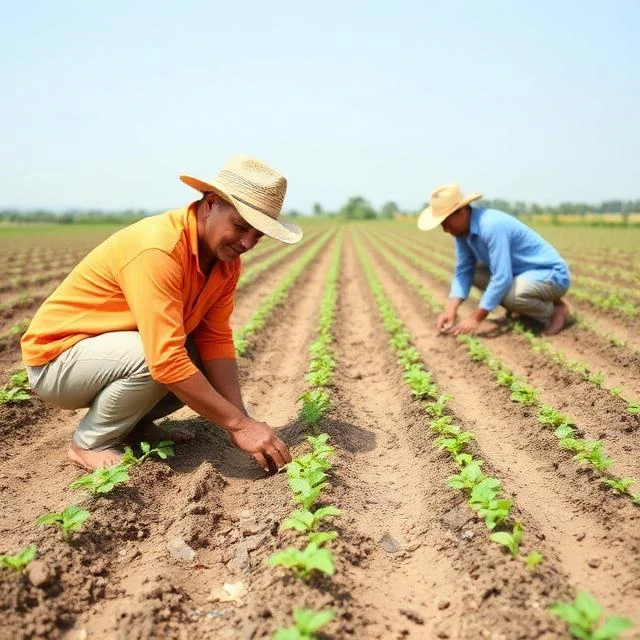
Some crops get a head start. Instead of sowing seed directly in the field, farmers grow seedlings in a nursery or greenhouse, then move them into the field once conditions are right. Transplanting gives plants a size advantage over weeds and lets growers time harvest more precisely.
The process requires care. Roots must be disturbed as little as possible. Seedlings need hardening off before they face sun, wind, and temperature swings. Watering immediately after transplanting helps roots settle into the new soil.
Crops often transplanted
- Tomatoes, peppers, and eggplant
- Brassicas like cabbage and broccoli
- Onions and leeks
- Rice in paddy systems
- Strawberries and other fruit
Mechanized transplanters plant thousands of seedlings per day, but hand transplanting remains common on small farms where precision and gentle handling matter more than speed.
Comments
No comments yet. Be the first to share a thought.
Leave a comment