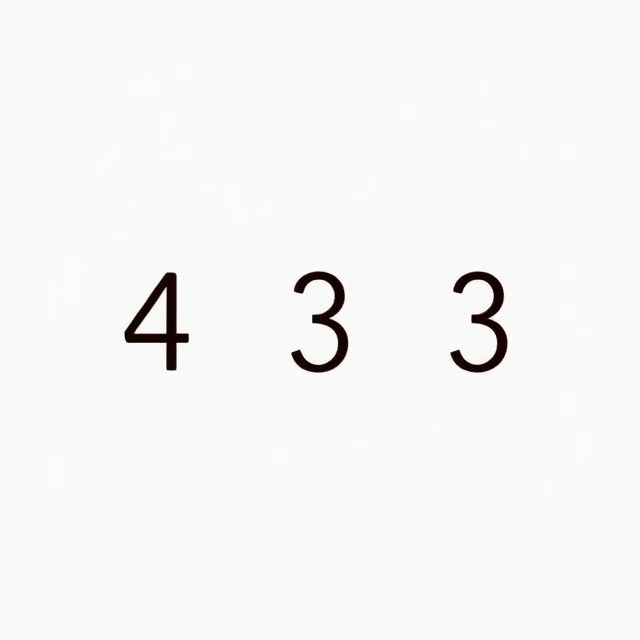
Multiplication is repeated addition. 4 × 3 means 4 + 4 + 4, which equals 12. It is faster than adding equal groups one by one. The result is the product; the numbers multiplied are factors.
Multiplication is commutative (4 × 3 = 3 × 4) and associative ((2 × 3) × 4 = 2 × (3 × 4)). It distributes over addition: 2 × (3 + 4) = 2×3 + 2×4. These properties make calculation flexible and underpin algebra.
Multiplication extends from whole numbers to fractions, decimals, negatives, and complex numbers. In geometry, it computes area. In probability, it combines independent events. In physics, it appears in formulas like F = ma. The operation is elementary, but its applications are everywhere.
- Repeated addition of equal groups
- Commutative, associative, distributive
- Extends to fractions, decimals, and complex numbers
- Used in area, probability, and physics formulas
Comments
No comments yet. Be the first to share a thought.
Leave a comment