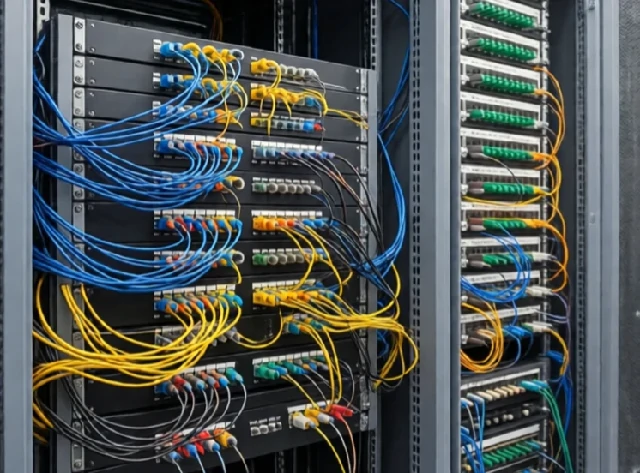
Wavelength Division Multiplexing shares fiber by using multiple light wavelengths. Each wavelength carries a separate data stream. They travel together without interfering. At the receiver, they are separated. WDM multiplies the capacity of a single fiber. It is how undersea cables carry terabits per second.
WDM comes in two main types. Coarse WDM uses few wavelengths, spaced widely. Dense WDM uses many wavelengths, spaced closely. DWDM can carry 80 or more channels on one fiber. Each channel can run at 10, 40, or 100 Gbps. The total capacity is enormous.
WDM characteristics
- Wavelengths: separate colors of light
- Capacity: multiplies fiber bandwidth
- Distance: needs amplifiers
- Types: CWDM, DWDM
- Used in: undersea cables, long-haul fiber
WDM is essential for long-haul networks. It avoids the cost of laying more fiber. It upgrades capacity by changing equipment at the ends. It is used in data centers, metro networks, and undersea cables. The fiber is the highway. WDM is the lanes.
Comments
No comments yet. Be the first to share a thought.
Leave a comment