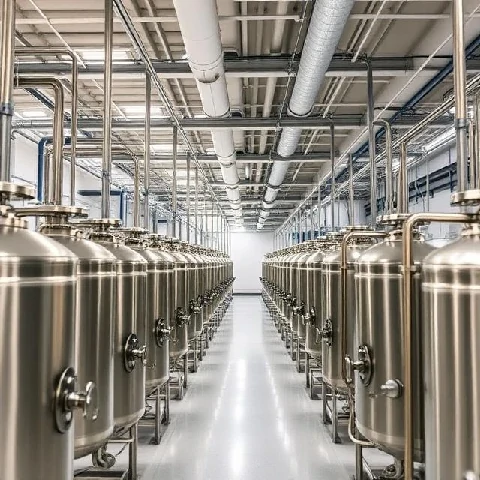
Biomanufacturing uses living systems to make products at industrial scale. It is how insulin is produced, how vaccines are made, how enzymes for laundry detergent are generated, and how some plastics and chemicals are synthesized. The living systems are usually engineered bacteria, yeast, or mammalian cells. They are grown in large tanks, fed nutrients, and harnessed to produce a desired molecule.
The process has several stages. Upstream processing prepares the cells and the culture medium. Fermentation or cell culture grows the cells and produces the product. Downstream processing purifies the product, removing cells, debris, and impurities. Each stage must be controlled precisely. Temperature, pH, oxygen, and nutrient levels affect yield. Contamination can ruin a batch worth millions of dollars.
Biomanufacturing is capital-intensive. A single facility can cost hundreds of millions of dollars and take years to build. It is also highly regulated. The FDA and the European Medicines Agency set standards for good manufacturing practice. Every batch must be tested for identity, purity, potency, and safety.
The field is growing as more products shift from chemical synthesis to biological production. The challenge is scale. What works in a one-liter flask must work in a 10,000-liter tank. That is not always straightforward.
Comments
No comments yet. Be the first to share a thought.
Leave a comment