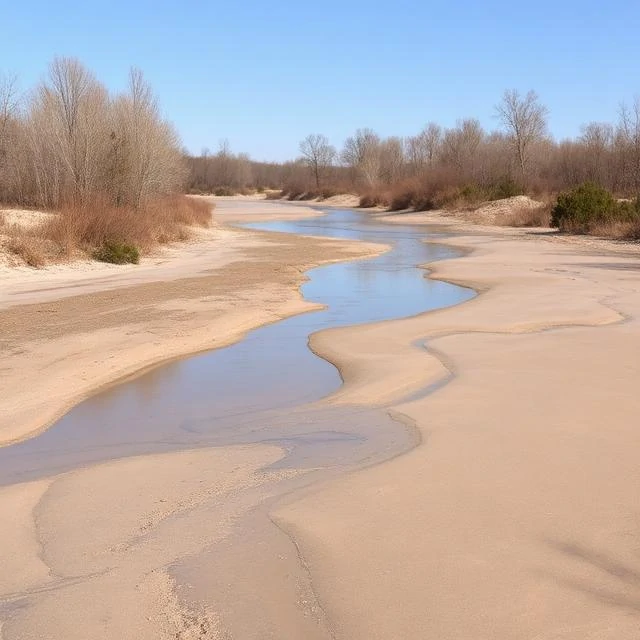
Silt is the middle-sized soil particle, smaller than sand and larger than clay. It feels smooth and floury when dry, slippery when wet. Silt is usually carried by water and deposited in floodplains, lake beds, and river deltas.
Silt soils are often very fertile. The Nile floodplain, the Mesopotamian plain, the Yellow River valley, and the Ganges delta all rest on deep silt deposits laid down over thousands of years. These soils hold moisture well and release nutrients steadily, which is why they have supported dense populations for millennia.
Strengths and weaknesses
- Good water retention and nutrient supply
- Easy for roots to penetrate
- Tends to crust after heavy rain, blocking seedling emergence
- Compacts under heavy machinery
- Erodes easily when bare
Loess, a wind-deposited silt, covers large areas of China, Europe, and the American Midwest. It forms some of the deepest and most productive soils on Earth, though it is also highly vulnerable to erosion when vegetation is removed.
Comments (2)
Leave a comment